The Trillion-Dollar Receipt: Calculating the Economy of Slavery
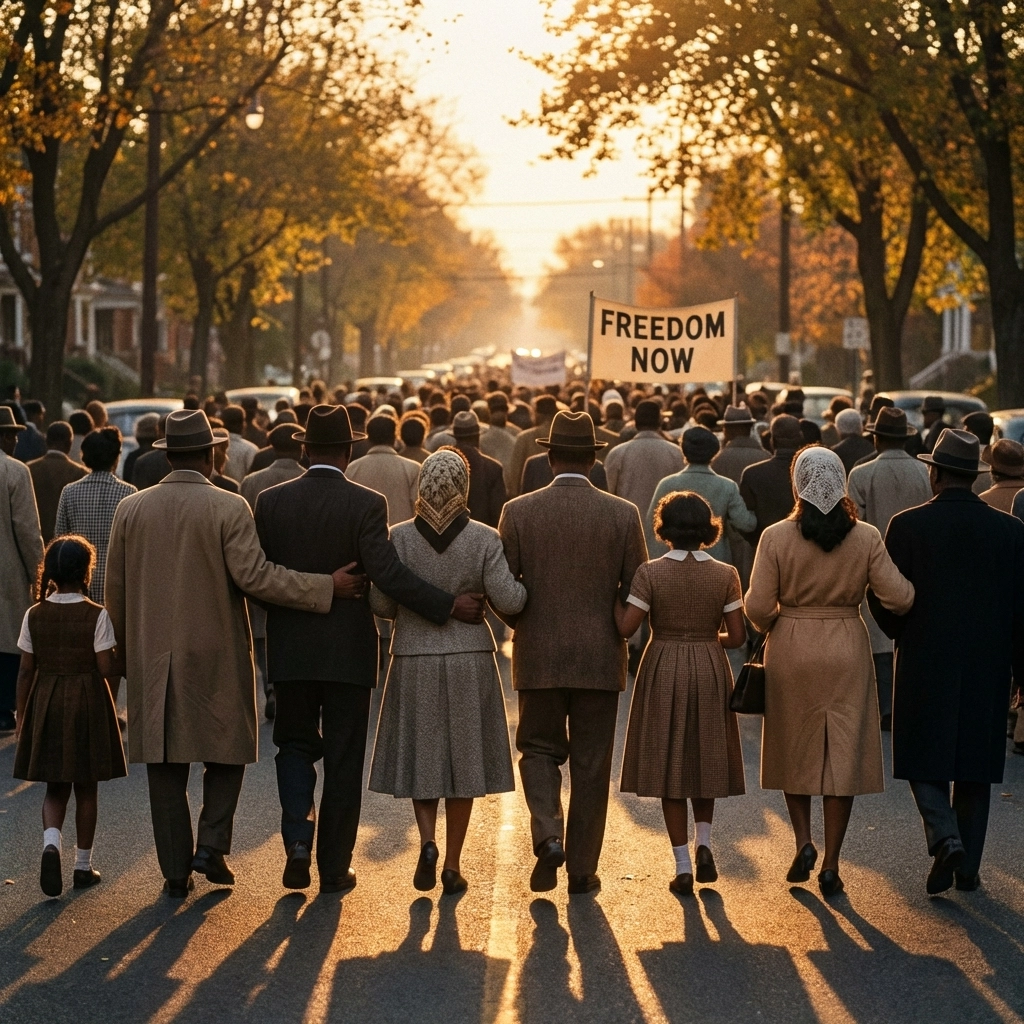
![[HERO] The Trillion-Dollar Receipt: Calculating the Economy of Slavery](https://cdn.marblism.com/ERE3Gm04mpl.webp)
When we talk about the history of the United States, we often hear about “pulling yourself up by your bootstraps.” We hear about the “American Dream” and the hard work that built this country into a global powerhouse. But for the Black community here in Rochester and in urban centers across the country, there’s always been a giant elephant in the room: who actually did the work, and where did the money go?
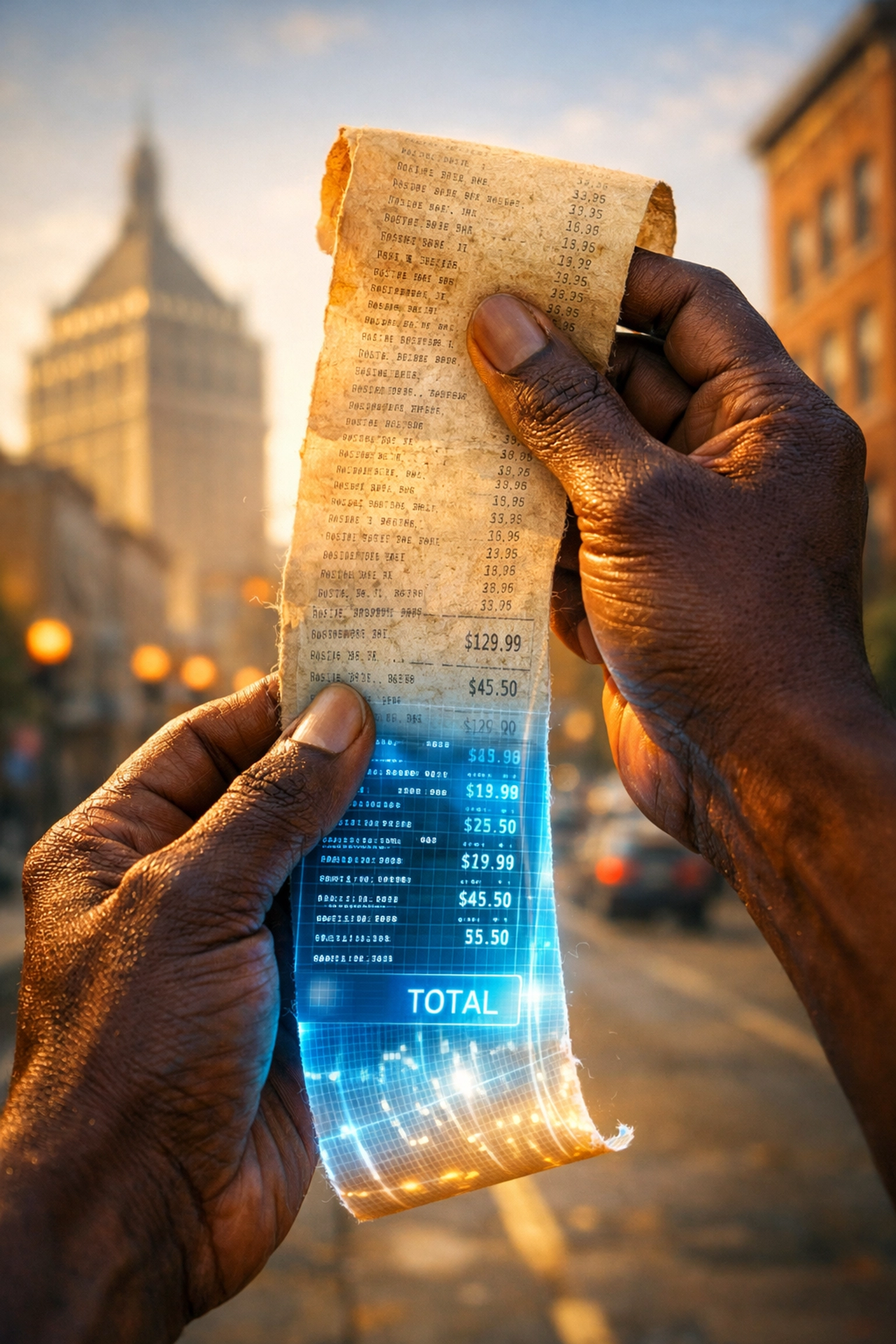
At the Community Justice Initiative, we believe in getting the facts straight. To understand why our neighborhoods look the way they do today, we have to look at the “receipt.” We aren’t just talking about a few bad years of history; we’re talking about a trillion-dollar debt that has never been settled.
Let’s break down the math of how slavery didn’t just support the U.S. economy: it was the U.S. economy.
410 Billion Hours of Overtime
If you’ve ever worked a double shift or a 60-hour week, you know how exhausting that is. Now, imagine that labor being done by millions of people for over two centuries without a single paycheck, a day off, or a retirement plan.
Researcher J. David Hacker did the heavy lifting on these numbers. His research indicates that enslaved people provided roughly 410 billion hours of unpaid labor between 1619 and 1865.
Think about that number for a second. 410 billion. If you were to try and count to a billion, it would take you about 31 years. Now multiply that by 410. That is the sheer volume of human life, sweat, and energy that was poured into building the infrastructure, the agriculture, and the wealth of this nation for free.
When we talk about the “wealth gap” in Rochester today, we are looking at the direct result of 410 billion hours of stolen time. That’s time that wasn’t used to build Black businesses, save for homes, or pass down an inheritance. It was time used to build someone else’s empire.

More Valuable Than Every Railroad and Factory
There’s a common myth that slavery was just a “Southern thing” and that the North was built on modern industry like factories and railroads. The data shows something much more connected and much more sinister.
In the mid-1800s, enslaved people were the largest financial asset in the entire U.S. economy. If you took all the money invested in every railroad in America and every factory in the North and added them together, they still wouldn’t be worth as much as the value placed on the bodies of enslaved Black people.
In 1860, the total value of enslaved people as capital assets was estimated between $2.7 and $3.7 billion. In today’s money, that is an astronomical sum, but even back then, it meant that the “wealth” of the country was literally tied to human bondage. This wasn’t a side hustle for the American economy; it was the foundation.
Banks in New York (and even those that eventually had ties to our region) used enslaved people as collateral for loans. Insurance companies wrote policies on them. The textile mills in the North ran on the cotton picked in the South. The whole system was a giant machine designed to turn Black labor into white generational wealth.
Driving the National Growth
Some people try to argue that slavery was a “dying institution” or that it wasn’t that important to the overall growth of the U.S. The research by Stelzner and Beckert tells a different story.
Between 1839 and 1859, the United States saw a massive jump in its national commodity output (the stuff the country produces and sells). According to their research, slavery accounted for roughly 12% to 24% of that entire increase.
Despite making up only about 12% of the population by 1859, the work done by enslaved people was driving nearly a quarter of the country’s economic growth. They were punching way above their weight class while being given nothing in return. They were the engine of the American economy, but they weren’t allowed to drive the car: and they certainly didn’t get to keep any of the gas money.

The $20 Trillion Bill
So, what is the total “receipt” worth today? If we actually sat down to calculate the back pay, what would it look like?
Dr. Thomas Craemer, a researcher at the University of Connecticut, decided to do exactly that. He didn’t just look at the hourly wage; he looked at the value of that unpaid labor and compounded it with interest over time. Because, let’s be real, if you owe someone money for 150 years, you’re going to owe some serious interest.
Dr. Craemer’s research estimates the value of unpaid slave labor between 1776 and 1865 at $14 trillion to $20 trillion in today’s dollars.
To put that in perspective, $20 trillion is roughly the size of the entire U.S. Gross Domestic Product (GDP). It is a number so large it’s hard to wrap your head around. But it represents the “missing wealth” in our communities. When you walk through neighborhoods that have been redlined or see schools that are underfunded, remember that $20 trillion receipt. That is the capital that was supposed to be in our pockets, in our banks, and in our businesses.
The Myth of Efficiency: Slavery Was Actually Holding Us Back
One of the most interesting pieces of modern research shows that slavery wasn’t just cruel: it was actually inefficient.
We often hear that the South was “rich” because of slavery, but it was a fake kind of wealth that only benefited a few people at the top. Research indicates that Emancipation actually led to a potential productivity gain of 4% to 35%.
Why? Because the system of slavery was inherently broken. It relied on coercion, violence, and keeping people from learning or innovating. It created a “deadweight loss” for the economy. When people are free to choose their work, to innovate, and to be paid for their ideas, the whole economy grows faster.
This means that slavery didn’t just steal from Black people; it actually slowed down the economic potential of the entire region. The “elites” of the 1800s were so addicted to the power of owning people that they were willing to hold back the entire country’s progress just to keep their status.

Why This Matters for Us in Rochester
You might be wondering, “Why are we talking about the 1800s in 2026?”
We’re talking about it because wealth doesn’t just disappear. It moves. The wealth created by those 410 billion hours of labor was used to build universities, to fund the industrial revolution, and to create the suburban developments that many Black families were later banned from entering.
In Rochester, we see the remnants of this every day. We see it in the “Old Money” that still dictates much of the city’s direction. We see it in the gap between the wealth in the suburbs and the poverty in the city center. That gap isn’t an accident, and it isn’t because people aren’t “working hard enough.”
It’s because one group of people got a $20 trillion head start, and the other group was handed the bill.
Understanding the “Trillion-Dollar Receipt” changes the conversation from “charity” to “justice.” When we talk about reparations, we aren’t asking for a handout. We are asking for the check to be settled.
Final Thoughts
The data is clear. The American economy was built on a foundation of stolen labor and human capital that outweighed the value of all Northern industry combined. From the 12-24% of national growth to the $20 trillion in compounded back pay, the numbers don’t lie.
At the Community Justice Initiative, we’re going to keep bringing these facts to the forefront. Because you can’t have “Justice” without “Just-Us” knowing the truth about where we’ve been and what is actually owed.
Keep your eyes on the receipt. It’s time for the bill to be paid.
The Modern Fight for Reparations (and Why It’s Not “Ancient History”)
A lot of folks in Rochester hear “reparations” and think it’s either impossible, too complicated, or something that has nothing to do with the budget decisions being made right now. But reparations isn’t just a history conversation—it’s an active policy fight, happening in Congress, in states like California, and here in New York.
If we can calculate the “receipt,” we can also talk about the “settlement.” And that means getting clear on what’s on the table today.
H.R. 40: The Bill That’s Been Waiting Since John Conyers
H.R. 40 is the federal bill that would create a commission to study slavery and its lasting harms and to develop reparations proposals for African Americans. People hear “study” and roll their eyes, but this matters because the U.S. government has a long history of ignoring harm until it’s officially documented, costed out, and forced into the public record.
Here’s the key part Rochester should know: H.R. 40 was first introduced in 1989 by Congressman John Conyers (Detroit) and he reintroduced it year after year for decades. The “40” is a reminder of the broken promise of 40 acres and a mule—a promise made, then snatched back.
After Conyers, other members of Congress carried the torch. The bill has gained more attention in recent years, but it still hasn’t become law. That’s why local pressure matters—because federal politicians move when communities keep pushing.
Who Qualifies? Race-Based vs. Lineage-Based Eligibility (California as a Real Example)
One of the biggest debates in the reparations space is eligibility—basically, who should receive reparations and how we define that fairly.
Two common models show up again and again:
1) Race-based models
This approach focuses on harms tied to being Black in America, including slavery and the long tail that followed: Jim Crow, redlining, job discrimination, school segregation, predatory lending, and more.
What people like about it: it recognizes that anti-Black policy hit broadly and systemically, not just in one family line.
What critics raise: questions about where to draw the line (for example: immigrants vs. multi-generation Black families, or how to handle proof).
2) Lineage-based models
This approach ties eligibility to being able to prove descent from enslaved people in the United States (often framed as “ADOS” — American Descendants of Slavery).
California is a well-known example of a lineage-centered approach in practice. California’s reparations work has focused on defining eligibility around descendants of enslaved people in the U.S., and it has pushed the conversation toward documentation, genealogy, and state responsibility for specific harms.
What people like about it: it tries to target the group that experienced the original theft and the policies built directly on top of it.
What critics raise: documentation barriers (especially when records were destroyed, names were changed, or families were separated), and whether it fully addresses harms that continued long after slavery for Black people more broadly.
For Rochester, this isn’t abstract. How eligibility is defined changes what a program looks like—cash payments, housing grants, business capital, tuition support, tax credits, land restoration, mental health supports—because the size and scope depends on who is included.
Bringing the Receipt Home: The New York Fight
It’s easy for reparations to feel like a D.C. conversation that never lands here. But New York is where a lot of the real “show your work” stuff is happening—public hearings, testimony, and local receipts getting put on the record city by city.
And for us at Community Justice Initiative, this is the part that matters most: New York communities are documenting the harm in plain language, so the state can’t pretend it’s all abstract.
Rochester: March 2025 @ the Memorial Art Gallery — Urban Renewal, Clarissa Street, and the Inner Loop
Rochester showed up in March 2025 at a public hearing held at the Memorial Art Gallery. A big theme that came through was “Urban Renewal”—and folks weren’t talking about it like a cute city-planning term. They were talking about it as displacement.
Testimony centered the destruction of the Clarissa Street neighborhood and the building of the Inner Loop, which together displaced over 4,200 households. That’s not “revitalization.” That’s the state and city deciding who gets to stay, who gets moved, and who gets to build wealth.
If you’re wondering why certain families in Rochester never got to pass down a home, why certain business corridors disappeared, or why poverty got concentrated where it did—this is a major part of the answer.
Buffalo: November 2024 @ Elim Christian Fellowship — Environmental Racism and Wealth Loss
Buffalo hosted the first-ever New York State public hearing in November 2024 at Elim Christian Fellowship—and the focus hit a topic a lot of people feel but don’t always have a name for: environmental racism.
The testimony connected the dots between toxic pollutants, redlining, and the long-term damage to Black wealth in Buffalo. When certain neighborhoods get boxed into pollution, highways, and bad infrastructure, it’s not just health impacts—it’s property value, business investment, insurance costs, and whether families can build any equity at all.
That’s the “receipt” in real life: the environment, the map, and the money all tied together.
Syracuse: August 2025 @ Onondaga Community College — Land Theft and Loss of Black Land Ownership
In August 2025, Syracuse held a hearing at Onondaga Community College with a specific focus: land theft and the loss of Black land ownership.
This part matters because land isn’t just “property.” Land is stability. Land is collateral. Land is the difference between being able to start something (a business, a farm, a rental property, a family home) and being stuck renting forever with nothing to pass down.
When Black land gets taken—through scams, discriminatory lending, tax foreclosure pressure, legal games, or straight-up policy—generational wealth gets cut off at the knees. Syracuse put that reality on the record.
NYC: “Reparations Now” + A Longer Runway for the Commission Report (Extended to Early 2027)
New York City has its own track too. Council Members Crystal Hudson and Nantasha Williams introduced the “Reparations Now” legislative package, pushing steps that are both symbolic and material—things like public apologies, memorials, and plans aimed at closing gaps in housing and healthcare.
And NYC is also taking time to do this right: the NYC reparations commission’s report timeline has been extended to early 2027 to allow a deeper, more thorough dive. That’s important, because rushing a report is how you end up with performative recommendations and no real repair.
The Timeline: What New York State Is Targeting Next
On the state side, the New York State Commission—chaired by our own Dr. Seanelle Hawkins—is working on a real timeline, not just talk.
Here’s what the community should know:
- Draft report هدف: June 2026
- Final legislative recommendations due: January 2027
That means right now is the window where public testimony and local documentation still has the power to shape what ends up in the final recommendations. This is the part where Rochester (and every upstate city) has to stay loud, organized, and consistent.
Haiti’s “Independence Debt”: When Reparations Went the Wrong Direction
If anybody ever says, “Reparations has never happened,” Haiti is proof that it has—but in the most backwards, unjust way possible.
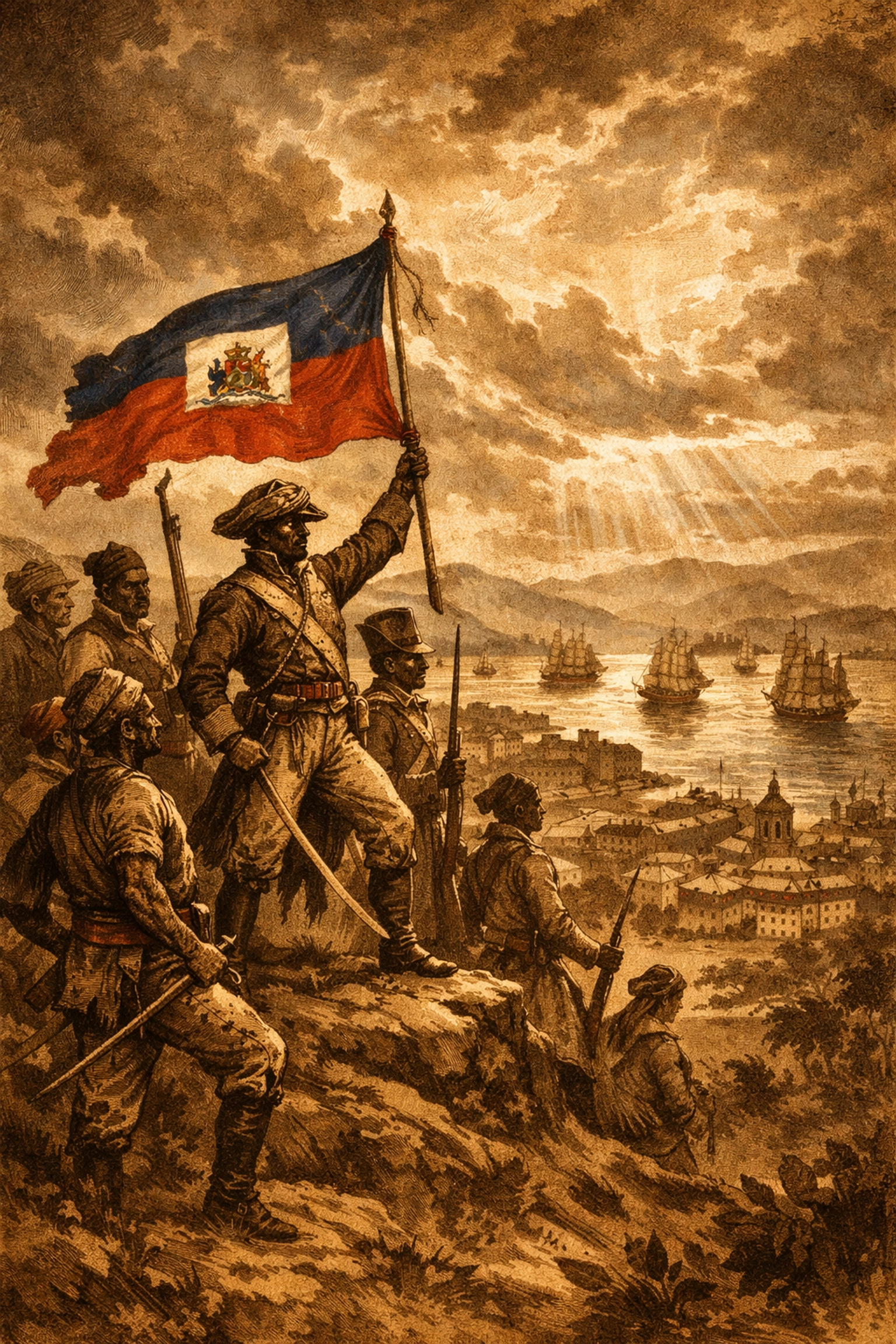
After Haiti won its independence from France (the first Black republic born out of a successful slave revolution), France demanded Haiti pay an “indemnity” to compensate the former enslavers for their “loss of property.” Haiti was essentially forced to pay for its own freedom—often described as the Independence Debt.
That is reparations in reverse:
- the oppressed had to pay the oppressor
- wealth was extracted from a Black nation for generations
- development was delayed because national revenue went to debt payments instead of schools, roads, healthcare, and business growth
For Rochester folks, the lesson is clear: when harm is “settled” the wrong way, it locks in inequality for a long time. Reparations is not some wild idea—it’s a question of who pays whom, and whether justice flows to the people who actually did the labor and took the damage.
Different Reparations Strategies: N’COBRA, NAARC, and ADOS (Same Goal, Different Playbooks)
Even in our own community, you’ll hear different approaches. That doesn’t have to mean division—but we should be honest about the differences so we can organize smart.
N’COBRA (National Coalition of Blacks for Reparations in America)
N’COBRA is one of the long-standing organizations in this space. Their approach is broad and injury-based: slavery, plus the systems that followed it (Jim Crow, redlining, mass incarceration, wealth stripping). They’ve pushed hard for federal action and for reparations to be treated like a serious national obligation—not charity.
NAARC (National African American Reparations Commission)
NAARC promotes a structured framework (often referenced as a multi-point plan) that focuses on repairing harms across multiple categories—things like education, health, housing, criminal justice, and economic development. Their approach is also strongly oriented toward policy and governance, making sure reparations is not reduced to one-time checks without systemic repair.
ADOS (American Descendants of Slavery)
ADOS is known for a more explicitly lineage-centered approach. Their focus is that reparations should be targeted specifically to descendants of people enslaved in the United States, and they emphasize eligibility rules that prevent the issue from becoming so broad that the original harmed group gets diluted or pushed aside.
In Rochester, we can hold space for these differences while staying locked in on the bigger point: the receipts are real, the harm is measurable, and our communities deserve repair that matches the scale of what was taken.
Final Thoughts
The data is clear. The American economy was built on a foundation of stolen labor and human capital that outweighed the value of all Northern industry combined. From the 12-24% of national growth to the $20 trillion in compounded back pay, the numbers don’t lie.
At the Community Justice Initiative, we’re going to keep bringing these facts to the forefront. Because you can’t have “Justice” without “Just-Us” knowing the truth about where we’ve been and what is actually owed.
Keep your eyes on the receipt. It’s time for the bill to be paid.
![[HERO] Frederick Douglass: The Lion of Anacostia and the Quest for Freedom](https://cdn.marblism.com/4n0_J3HBm04.webp)
![[HERO] The 75-Country Freeze: New Ban, Old Playbook?](https://cdn.marblism.com/o4E9j9PAqTb.webp)



![[HERO] Dr. Martin Luther King Jr.'s Legal Legacy: Breaking Down His Accomplishments and Everyday Impact](https://cdn.marblism.com/aw4rxWCh6Zb.webp)









 Diallo Payne Law Library