• The Organizer Behind the Movement: Ella Baker and the Challenge to MLK

    Black community organizers gathered in a circle, sharing ideas and building power together

    When many people picture the Civil Rights Movement, they picture Martin Luther King Jr. speaking from a pulpit, a march, or a microphone. His voice was powerful. His leadership mattered.

    But movements are never built by one person alone.

    Behind every major speech were people making phone calls, organizing meetings, registering voters, raising money, sharing food, building trust, and helping ordinary people find the courage to act. One of the most important organizers behind the movement was Ella Josephine Baker.

    Baker did not want the movement to depend on one famous leader. She believed lasting change came when everyday people developed the confidence and skills to lead themselves. Her approach challenged Martin Luther King Jr., the Southern Christian Leadership Conference, and many other movement leaders.

    Her message still matters in Rochester and urban communities today:

    > Strong people do not need strong leaders.

    Ella Baker believed movements should belong to the people

    Ella Baker was born in 1903 and raised in Littleton, North Carolina. She graduated from Shaw University in 1927 and moved to New York, where she became involved in cooperative economics and community organizing.

    Her early work reflected ideas that remain important today: Black economic power, shared resources, education, and collective action.

    In the 1930s and 1940s, Baker worked with the NAACP. She became a field secretary and later director of branches. Her work took her into communities across the South, where she helped local people organize around voting rights, education, and racial justice.

    Baker did not simply arrive in a community and tell people what to do. She listened. She identified local talent. She helped people recognize that they already had knowledge, courage, and leadership.

    That was different from the model of leadership that placed a minister or public figure at the center of every campaign.

    Baker understood that visible leaders could inspire people. But she also saw a danger: when a movement becomes too focused on one person, everyone else may begin to see themselves as followers instead of decision-makers.

    How Ella Baker challenged Martin Luther King Jr.

    In 1957, Baker helped organize the Southern Christian Leadership Conference, commonly known as the SCLC. The organization brought together Black ministers and churches to coordinate campaigns across the South.

    Baker became one of its most important staff members. She managed offices, coordinated communication, helped build campaigns, and supported voter-registration work. In many ways, she helped turn the SCLC from an idea into a functioning organization.

    Yet Baker also experienced tension within the organization.

    The SCLC was built around prominent male ministers, especially Martin Luther King Jr. Baker respected King’s courage and public influence, but she questioned the organization’s leader-centered structure. She believed the movement could not depend on a “great man” model in which ministers made decisions while local people carried out the work.

    She also challenged the assumption that women should do the behind-the-scenes labor while men received the public recognition. As a Black woman with years of organizing experience, Baker knew that the movement needed more than inspirational speeches. It needed systems, training, local leadership, and shared decision-making.

    Baker was not arguing that King had no value. She was arguing that King was not the movement.

    In a 1968 interview, Baker explained her view clearly:

    > “The movement made Martin rather than Martin making the movement.”

    Her point was not to insult King. She was saying that King’s public leadership grew from the courage and organizing of thousands of people. The Montgomery Bus Boycott, sit-ins, voter-registration drives, freedom schools, and local campaigns created the movement that made King’s leadership possible.

    That is an important lesson: public leaders may represent a movement, but they do not own it.

    An original illustration of student organizers meeting together in the spirit of the 1960 SNCC founding conference

    Baker and the birth of SNCC

    Ella Baker’s challenge became especially clear in 1960.

    After Black college students began sit-ins at segregated lunch counters in Greensboro, North Carolina, Baker recognized that the students were not merely young followers waiting for instructions. They were already organizing, taking risks, and developing their own strategies.

    She helped arrange a student conference at Shaw University in Raleigh, North Carolina, during Easter weekend in April 1960. Martin Luther King Jr. and the SCLC helped provide financial support for the meeting.

    King hoped the students would become a youth division of the SCLC.

    Baker encouraged something different.

    She pushed the students to create their own independent organization: the Student Nonviolent Coordinating Committee, or SNCC. She believed the students needed room to make decisions, learn from mistakes, and develop their own style of leadership.

    SNCC became one of the most important grassroots organizations of the Civil Rights Movement. Its members worked on voter registration, freedom schools, community organizing, and political empowerment. They built relationships with local residents instead of treating communities as places where outside leaders simply arrived to hold rallies.

    Baker helped SNCC understand a basic principle:

    > Those who do the work should help make the decisions.

    That principle protected SNCC from becoming only an extension of the SCLC. It also encouraged young people to see themselves as organizers, not just supporters of famous leaders.

    Why group-centered leadership matters

    Baker called for “group-centered leadership” instead of “leader-centered” leadership.

    Group-centered leadership does not mean that nobody has responsibility. It means responsibility is shared. People learn how to facilitate meetings, communicate with neighbors, solve problems, raise resources, and make decisions together.

    This kind of leadership can be slower than following one powerful speaker. It can include disagreement. It requires patience.

    But it is also stronger.

    A leader-centered organization may struggle when its central figure is attacked, arrested, criticized, or removed. A group-centered organization can continue because many people know how to carry the work forward.

    For Rochester and other urban communities, this lesson is practical. Strong communities need:

    • Neighborhood residents who understand local problems
    • Young people who are trusted with real responsibility
    • Elders whose experience is respected
    • Local businesses that support community needs
    • Organizations that share information and resources
    • Mutual-aid networks that respond before outside institutions do

    This is how we build power through education, culture, economics, and mutual aid. We do not wait for one perfect leader to save us. We develop many capable people.

    Neighbors in a Rochester-inspired urban community planning education, mutual aid, and local economic action together

    What Ella Baker teaches us about Black leadership

    Ella Baker’s importance goes beyond her connection to King and SNCC. She represented a different vision of Black leadership.

    She showed that organizing is a form of leadership, even when it does not produce headlines. She demonstrated that listening can be more powerful than speaking. She believed young people were not the future only; they were part of the movement in the present.

    Her work also connected civil rights to economic cooperation and community independence. Before SNCC, Baker had worked with cooperative organizations. Later, she supported voting rights, local political organizing, and campaigns that helped communities challenge racial power.

    Her approach is especially valuable today because many communities are tired of being asked to follow personalities. We need institutions, relationships, and skills that last.

    That means teaching people how to:

    • Research the history of their communities
    • Tell their own stories
    • Build local media
    • Support Black-owned businesses
    • Organize tenant, worker, and neighborhood campaigns
    • Create networks of care
    • Make decisions together

    This approach connects Ella Baker’s legacy to the work of people such as Ida B. Wells, who used journalism and organizing to challenge racism and defend Black communities.

    There is a useful Rochester lesson in Wells’s example as well. Her relationship with Susan B. Anthony included both friendship and serious disagreement over the exclusion and political “expediency” surrounding Black women’s suffrage. Wells also worked with Frederick Douglass at the 1893 World’s Columbian Exposition to protest the fair’s exclusion of Black achievement and helped produce The Reason Why the Colored American Is Not in the World’s Columbian Exposition.

    It is important to be historically accurate: the record shows Wells and Douglass collaborating at the exposition, not confronting each other there. Wells was also among the early organizers and founding members associated with the NAACP. Her example, like Baker’s, reminds us that strong movements require people willing to challenge respected leaders when justice is at stake.

    The top 5 things we should remember about Ella Baker

    1. She believed ordinary people could lead themselves

    Baker did not see local residents as an audience. She saw them as thinkers, organizers, and decision-makers.

    2. She challenged charismatic, male-centered leadership

    Baker respected King but questioned a structure built around famous ministers and one public leader. She wanted women, students, workers, and local residents to have real power.

    3. She helped create SNCC as an independent organization

    Rather than allowing students to become an arm of the SCLC, Baker encouraged them to build their own organization and develop their own leadership.

    4. She valued group-centered leadership

    Baker believed movements were stronger when responsibility was shared. Her vision was not “strong leaders over weak followers,” but strong people working together.

    5. Her legacy is a blueprint for Rochester today

    Ella Baker teaches us to invest in education, culture, local economics, youth leadership, and mutual aid. The goal is not to find one person who can do everything. The goal is to build a community where many people are prepared to do the work.

    Ella Baker worked behind the scenes, but her ideas were never secondary. She helped shape the people and organizations that changed history.

    Her message remains clear: build strong people, build strong communities, and never confuse visibility with leadership.

    Learn more about Ella Baker through the SNCC Digital Gateway and the Martin Luther King, Jr. Research and Education Institute. You can also explore the North Carolina Department of Natural and Cultural Resources’ history of Baker and SNCC.

    Black neighbors gathered at one level around a shared table, representing Ella Baker's vision of strong people and collective leadership
  • Ida B. Wells and the Power of the Pen: Owning Our Narrative in the Digital Age

    Editorial illustration of Ida B. Wells connecting investigative journalism with modern community media

    Every community has a story. The question is: Who gets to tell it?

    For generations, Black communities have often been described by people outside of them. Newspapers, television stations, politicians, police departments, and other institutions have shaped public opinion about Black neighborhoods and Black people. Too often, those stories focus on crime, poverty, conflict, or failure while ignoring our creativity, leadership, organizing, culture, and care for one another.

    Ida B. Wells understood the danger of allowing others to define us.

    Through journalism, investigation, and fearless organizing, Wells challenged the lies used to justify racial violence. She gathered facts, listened to families, studied records, and published what powerful people wanted hidden. Her work reminds us that storytelling is not only about communication. It is also about power, protection, education, and self-determination.

    Today, her pen has become the phone, the camera, the podcast microphone, the neighborhood newsletter, and the independent media platform. Her example still speaks directly to Black communities in Rochester and across the country.

    Ida B. Wells Used Journalism to Challenge a Deadly Lie

    Ida B. Wells was born into slavery in Holly Springs, Mississippi, in 1862. She became a journalist, newspaper owner, educator, civil rights activist, and advocate for women’s suffrage.

    Her journalism changed after three of her friends: Thomas Moss, Calvin McDowell, and Will Stewart: were lynched in Memphis in 1892. The men operated a grocery store that competed with a white-owned business. After racial conflict surrounding the store, they were arrested and later taken from jail and murdered by a white mob.

    The dominant story claimed that lynching was a form of punishment for crime. Wells investigated the facts and exposed that story as a lie. She showed that Black people were often targeted because of economic competition, political activity, personal disputes, or simply refusing to submit to white control.

    Wells did not rely on rumor. She interviewed witnesses and families, reviewed newspaper accounts and public records, traveled to communities where violence had taken place, and compared individual cases. She published her findings in works such as Southern Horrors: Lynch Law in All Its Phases and A Red Record.

    Her reporting made racial violence visible. It placed the experiences of Black victims and families at the center of the public conversation. It also connected individual acts of violence to larger systems of economic, political, and racial control.

    That is one of the most important lessons from Wells: telling the truth requires more than having an opinion. It requires learning, documenting, verifying, and having the courage to publish.

    Editorial illustration of Ida B. Wells examining testimony, records, and data beside a printing press

    Owning the Narrative Means Owning the Platform

    Wells understood that it was not enough to ask mainstream newspapers to tell the truth. She helped lead and publish Black-controlled newspapers, including The Memphis Free Speech.

    That decision mattered. It also shaped how Wells approached coalition politics. She worked with major reform movements, but she refused to let Black suffering be pushed to the side for someone else’s comfort or strategy.

    That tension appeared in her conflicts with Susan B. Anthony and other white suffrage leaders. Anthony is often remembered as a champion of women’s voting rights, but Wells saw clearly that parts of the white suffrage movement were willing to prioritize white women’s advancement over racial justice. Wells was far more willing to confront lynching directly, to speak in militant terms about anti-Black terror, and to insist that Black freedom could not be postponed to make white allies comfortable. She also did not accept the idea that the movement should downplay Black men’s rights in order to center white women first. In those disagreements, the real question was bigger than personalities: Would the story of justice center white respectability, or would it tell the truth about racial violence and Black political rights?

    Wells chose to center racial justice, even when that made her inconvenient to powerful people. That choice is part of what it means to own our narrative. If someone wants our voice only when it is quiet, polished, and non-threatening, they do not really want the truth.

    When Black communities own the platform, they have more control over:

    • Which stories are considered important
    • Whose voices are included
    • What facts receive attention
    • How events are explained
    • Whether stories focus only on harm or also on Black agency and resistance

    Owning the narrative does not mean hiding problems. Wells did not protect the reputation of institutions at the expense of truth. She exposed violence because she believed Black people deserved safety, justice, and accurate information.

    The goal is not to create a perfect image. The goal is to create an honest one.

    A community-owned narrative can tell the truth about housing discrimination while also highlighting tenant organizing. It can report on violence while also showing the people preventing violence. It can discuss poverty while explaining the policies and economic systems that create unequal conditions. It can document injustice while showing Black people as thinkers, builders, parents, artists, workers, organizers, and leaders.

    This kind of storytelling gives people a fuller picture of who we are.

    Rochester Has Its Own Tradition of Black-Owned Storytelling

    Rochester has a powerful connection to the tradition of independent Black journalism.

    Frederick Douglass published The North Star in Rochester beginning in 1847. Through that newspaper, he challenged slavery, defended Black citizenship, and argued that Black people had the right to speak for themselves. His work helped establish Rochester as an important center for abolitionist organizing and Black political thought.

    That history also includes hard disagreements about strategy. In 1893, at the Chicago World’s Columbian Exposition, Black Americans were effectively shut out of the fair. Wells confronted Frederick Douglass over his decision to participate through the Haitian Pavilion because she believed his involvement risked legitimizing an event that excluded Black people while pretending to represent progress. Wells pushed the issue directly. Douglass listened. Out of that confrontation, Wells, Douglass, Ferdinand Barnett, and others helped produce the pamphlet The Reason Why the Colored American Is Not in the World’s Columbian Exposition, placing the truth of Black exclusion in front of international visitors.

    That moment matters because it shows Wells doing more than criticizing white institutions. She was willing to challenge even one of our greats when she believed the public story was being distorted. She understood that if we do not tell our own story, someone else will use our presence to cover up our exclusion.

    The tradition continued through community newspapers, radio, cultural organizations, churches, neighborhood groups, and local activists. These platforms created space for stories that larger media outlets often ignored.

    Wells also understood that owning our narrative required more than writing articles. It required building institutions. In 1909, she was part of the original group that answered the call for a national organization to defend Black rights, a process that led to the founding of the NAACP. Alongside figures such as W.E.B. Du Bois and other early organizers, Wells helped lay the groundwork for an institution meant to confront racial terror, disenfranchisement, and segregation on a national scale.

    But Wells also grew disillusioned with the organization’s white-led, moderate approach. She felt that leaders such as Mary White Ovington did not bring the militancy or national perspective needed to confront urgent racial injustice, and she believed they did not fully understand the struggles Black women were facing. By around 1912, Wells had stepped back from active participation because she viewed the leadership as too passive for the crisis Black people were living through. Later, even her name was pushed out of parts of the historical record.

    That part of the story matters too. It reminds us that the struggle is not only about getting into institutions. It is also about who gets to lead, who gets credited, and what happens when we rely on others to define our role in movements we helped build. Wells was not simply a participant who faded away. She was a founding force whose perspective became inconvenient to a leadership structure that preferred moderation and white influence.

    That history matters today. Rochester’s Black communities do not have to wait for outside media to decide what deserves attention. We can document our own neighborhoods, preserve our own history, and share our own solutions.

    Rochester already has a living example of that kind of work in GSL News, originally The GSL Show, founded in 2014 by Geoffery Rogers. Rogers began reporting as a teenager, around age 14, earning a reputation as Rochester’s youngest journalist. His work shows what community-owned media can look like in real time: on-the-ground reporting from Rochester neighborhoods, accountability journalism that goes where traditional outlets often will not, and a platform shaped by what the community needs rather than by corporate interests.

    That matters because the same principle that guided Ida B. Wells still matters now. Wells used the pen to expose lynchings and challenge the lies powerful people told about Black life. Rogers uses independent reporting to document what is happening in Rochester as it happens, making sure the community does not have to depend only on outsiders to explain our streets, our pain, our organizing, or our response.

    This kind of media has practical value too. It gives local businesses and organizers a way to advertise directly to the community they actually want to reach. It provides community news rooted in what is really happening in Rochester neighborhoods, not just what larger outlets choose to notice. And it creates space for investigative journalism from our own perspective, so we can dig into problems, ask harder questions, and tell our own stories instead of letting others define us.

    A local story might be an interview with an elder who remembers a changing neighborhood. It might be a report on unequal access to healthy food. It might be a video explaining a school board decision. It might be a photo essay about a Black-owned business. It might be a podcast about music, faith, organizing, or family life.

    Each story adds to the record.

    The Digital Age Gives Us New Tools: and New Responsibilities

    Social media has made it easier than ever to publish. A person with a phone can record an event, share information, interview a neighbor, or reach thousands of people in a single day.

    That access creates opportunities for community power. But it also creates responsibilities.

    Before sharing a serious claim, we should ask:

    1. What do we know?
    2. How do we know it?
    3. Who has been directly affected?
    4. Have we confirmed the information with more than one source?
    5. Could sharing this image or name put someone in danger?
    6. Does this story offer context, or does it only create outrage?

    These questions reflect Wells’s approach. She moved quickly when necessary, but she also investigated carefully. She understood that inaccurate information could harm the people she wanted to defend.

    In the digital age, owning our narrative means combining speed with discipline. We should use public records, direct interviews, verified video, local knowledge, and reliable data. We should correct mistakes openly. We should protect survivors and avoid turning people’s pain into entertainment.

    We should also remember that social media platforms are not the same as community ownership. They can change their rules, bury posts through algorithms, remove accounts, or use our content for profit. That is why independent websites, email newsletters, community archives, podcasts, local publications, and in-person gatherings remain important.

    Use social media: but do not let it be the only place where our history lives.

    Modern illustration of Rochester Black neighbors recording a podcast, interviewing one another, and sharing verified local stories

    Tell Stories That Build Power

    At Community Justice Initiative, we believe storytelling should support empowerment through education, culture, economics, and mutual aid.

    Education

    Teach people how to research, read data, recognize misinformation, and understand local government. Media literacy is community protection. When people know how systems work, they are better prepared to challenge them.

    Culture

    Document our traditions, music, language, art, food, family histories, and community celebrations. Culture is not decoration. It is memory, identity, and a source of strength.

    Economics

    Highlight Black-owned businesses, cooperative projects, workers, creators, and entrepreneurs. When we tell stories about where money flows and how wealth is built, we help people make stronger economic choices.

    Mutual Aid

    Share information about food distribution, housing support, transportation, health resources, legal assistance, and neighborhood care. A story can connect someone to help. It can also show that Black communities are not waiting for institutions to save us: we are already caring for one another.

    This is how media becomes more than content. It becomes infrastructure.

    What Can We Do Today?

    We do not all need to become professional journalists to follow Ida B. Wells’s example. We can begin with practical steps:

    • Interview an elder and preserve their story.
    • Attend a local meeting and report back clearly.
    • Support Black-owned newspapers, radio stations, newsletters, and podcasts.
    • Share community events and resources: not only crises.
    • Learn how to request and understand public records.
    • Verify information before reposting it.
    • Create a neighborhood archive of photographs, flyers, oral histories, and documents.
    • Teach young people to use cameras, audio tools, writing, and research.
    • Center the voices of people most affected by an issue.
    • Build media projects that remain accountable to the community.

    The work can be small and still matter. A carefully written post can correct a false rumor. A recorded interview can preserve history. A local investigation can expose an unfair policy. A story about a neighborhood solution can inspire another community to act.

    Our Stories Are Part of Our Freedom

    Ida B. Wells used the tools available to her: newspapers, pamphlets, speeches, statistics, and organizing networks: to confront a system built on silence and distortion.

    We have more tools today, but the central struggle remains familiar. Powerful institutions still shape public narratives. Black communities are still misrepresented, overlooked, and blamed for conditions created by unequal systems.

    That is why owning our narrative remains a form of justice.

    We must tell the truth about what is happening. We must preserve the wisdom of those who came before us. We must report on harm without allowing harm to define us. And we must tell stories that help people recognize their own power.

    The pen Ida B. Wells carried was not only an instrument for writing. It was a tool for education, resistance, accountability, and freedom.

    Today, that tool is in our hands.

    Editorial illustration of an intergenerational Rochester Black community archive and local newsroom with newspapers, cameras, audio equipment, and oral history recording

    Learn More

  • Diverse urban community gathering in Rochester NY promoting peace and safety

    When discussions turn to public safety and crime reduction, it is easy to default to polarized debates. Some argue exclusively for stricter law enforcement and heavier sentencing, while others champion sweeping social programs and community investment. But ask any criminologist, local leader, or neighborhood activist, and you will hear a different reality: building safer streets requires a synchronized, multi-layered ecosystem.

    At the Law Office of Craig D. Carson PLLC, we believe that understanding the complex mechanisms of public safety is vital for building resilient communities. True crime reduction is not about pulling a single lever. It demands active collaboration between grassroots community heroes, modern law enforcement, municipal leadership, national proven strategies, and foundational social welfare models.

    Here is a closer look at how crime reduction works in our own backyard of Rochester, what major U.S. cities have successfully implemented, and what the world’s most peaceful nations can teach us about long-term stability.


    1. The Rochester Ecosystem: Roles in Local Safety

    Tackling violence in Rochester requires a synchronized effort across every level of civic life. No single agency or group can do it alone.

    Grassroots Organizations and Community Heroes

    On the front lines of prevention and healing are Rochester’s community organizations, neighborhood groups, and local leaders who do the hard work of violence prevention long before a case ever reaches a courtroom. Many of these efforts connect through the broader Rochester Peace Collective and related neighborhood partnerships:

    • Rise Up Rochester: Focused heavily on crime-victim support and crisis response, Rise Up Rochester helps families navigate the immediate aftermath of homicides, providing grief support, relocation assistance, and conflict mediation to interrupt retaliatory cycles.
    • ROC the Peace: Founded by passionate advocates, ROC the Peace centers its mission on community healing, peer support, and remembrance events for families who have lost loved ones to violence, fostering solidarity and collective grief recovery.
    • Pathways to Peace: Operating directly under the City of Rochester’s Office of Violence Prevention, Pathways to Peace employs street-level outreach workers and violence interrupters. They work proactively in neighborhoods and schools (such as RCSD) to mediate brewing conflicts, mentor at-risk youth, and connect young people with jobs and positive alternatives.
    • Neighbors in Action: Representing resident-led neighborhood grants and engagement initiatives, these groups build local social cohesion, empowering neighbors to reclaim their blocks and look out for one another.

    Beyond these organizations, the anti-violence movement in Rochester is powered by individual leaders who show up every day. A special shout-out goes to Toni Nelson, John Rouse, Sirena Cotton (founder of ROC the Peace), Justin Morris, Niya Shabazz, and many others who are doing big things in the anti-violence realm — mediating conflicts on the streets, mentoring young people, supporting grieving families, and building the kind of neighborhood-level trust that no government program can replace.

    Community outreach workers and mentors collaborating with youth in an American city park

    Law Enforcement, City Council, and the Mayor

    While community groups build trust and interrupt street beefs, formal institutions provide the structural framework. It also helps to be clear about who does what:

    • Mayor Malik Evans: The mayor sets the city’s overall public safety vision, strategy, and budget. That includes appointing the police chief, backing community investment and prevention programs, and deciding how city government responds at a big-picture level under efforts like the Gun Violence State of Emergency. Voters can hold the mayor accountable for whether the city is getting safer or more dangerous. But the mayor does not run day-to-day police operations or make individual tactical decisions about how officers respond on the street.
    • The Rochester Police Department (RPD): RPD carries out policing on the ground through tools like data-led hot-spot policing, community policing, and alternative response units such as the Person in Crisis (PIC) Team, which helps respond to behavioral health crises while allowing investigators and patrol officers to stay focused on violent offenders and other public safety demands.
    • The Police Chief: The police chief runs the police department day to day. That includes hiring officers, deploying patrols, setting enforcement priorities, managing investigations, and deciding how police resources are used on the ground. The chief reports to the mayor, but has operational independence in how policing is executed.
    • The City Council: Acts through legislative support, funding violence-intervention budgets, and advancing initiatives like the ROC Against Gun Violence Coalition to ensure ongoing public accountability.

    In plain terms: the mayor handles policy, strategy, appointments, and budgets, while the police chief handles operations, tactics, and daily policing decisions.


    2. The Safest Big Cities in New York State: Rankings, Leaders, and Programs

    New York has six cities at or around the 100,000-resident mark, but only three have achieved the kind of sustained reductions that deserve attention. Based on violent crime rates, overall safety data, and innovative leadership, here are the three safest big cities in New York State. Just as important, these cities show why readers should separate the role of the mayor, who sets vision, strategy, budgets, and appointments, from the role of the police chief or commissioner, who runs day-to-day policing operations.

    1. Yonkers — Safest Big City in NY

    Mayor: Mike Spano | Police Commissioner: Christopher Sapienza

    Yonkers stands out as the safest of New York’s big cities. The city has reported overall crime down 42% since 2011, with violent crime down 27% in 2025 alone. Officials have also pointed to all-time lows for rape, robbery, and aggravated assault, the lowest bullet-to-body shootings among New York’s Big 5, and a 100% homicide clearance rate.

    Homicide & Shooting Statistics: Yonkers recorded just 13 bullet-to-body shooting victims in all of 2025 — the lowest among New York’s ‘Big 5’ cities. The city achieved a 100% homicide clearance rate. In the first four months of 2026, Yonkers reported zero firearm-related homicides.

    Yonkers also shows the division between policy leadership and policing operations. The mayor is responsible for the city’s broader public safety agenda, budget support, and backing prevention programs that voters can judge at the ballot box. The police commissioner runs the department’s daily law enforcement work, including deployment, investigations, enforcement priorities, and on-the-ground use of technology.

    Mayor Spano’s specific actions: He established the AWARE Crime Control Center, a real-time hub that synthesizes data from surveillance cameras, drones, and license plate readers citywide. He launched a Drone-as-First-Responder program that gets eyes on incidents before officers arrive. He introduced multi-unit property crime task forces and plainclothes patrols to combat shoplifting and auto theft. He pushed for Project Connect, a homelessness outreach initiative, and mobile mental health crisis teams. He also spent years working to end federal DOJ oversight of the police department, restoring local control and building community trust.

    Key programs and strategies:

    • AWARE real-time crime control center, which uses predictive modeling, drones, and license plate readers.
    • HEART Initiative, an addiction co-response model.
    • SNUG violence prevention, using YMCA-linked street interrupters.
    • Neighborhood Protection Partnership.
    • Police Cadets and the Youth Police Initiative.
    • PAL sports leagues and My Brother’s Keeper mentoring.
    • ASAP diversion for first-time youth offenders.
    • Project RISE trauma support.

    2. Syracuse — Second Safest Big City

    Mayor: Sharon Owens | Police Chief: Mark Rusin (sworn in January 2026)

    Syracuse ranks second based on its recent public safety results. The city reported crime down 22% in 2025, with downward trends continuing into 2026.

    Homicide & Shooting Statistics: Syracuse reported homicides down 39% in 2025 compared with 2024. Shootings dropped from approximately 165 in 2020 to just 56 in 2025 — a 66% reduction over five years.

    Here, the distinction in roles matters. Mayor Sharon Owens sets the city’s broader violence-reduction strategy, pushes community-based programs, and is accountable to voters for whether the city is moving in the right direction. Police Chief Mark Rusin runs the Syracuse Police Department day to day, including staffing decisions, patrol deployment, enforcement priorities, and implementation of tactical models like hotspot policing.

    Mayor Owens’s specific actions: As deputy mayor before becoming mayor, she was the architect of the city’s gun violence strategy. She created the Mayor’s Office to Reduce Gun Violence. She launched the Safer Streets Initiative pilot, which deploys credible messengers — people with street credibility and life experience — to mentor high-risk youth, mediate conflicts, provide job training, and offer therapy to those most likely to shoot or be shot. She guided the city’s Police Reform and Reinvention Collaborative, reshaping how police and community interact.

    Key programs and strategies:

    • The Mayor’s Office to Reduce Gun Violence, which uses credible messengers for neighborhood outreach and conflict intervention.
    • The Koper Curve strategy, requiring officers to conduct regular foot patrols in crime hotspots.
    • Police staffing support through the temporary waiver of the residency requirement for new recruits.
    • A strong partnership between police and violence interrupters.

    In simple terms, the mayor drives the citywide anti-violence plan, while the police chief decides how officers are used each day to carry that plan out.

    3. Albany — Third Safest Big City

    Mayor: Dorcey Applyrs | Police Chief: Brendan Cox

    Albany ranks third, with violent crime down 11% in 2025 compared with 2024, property crime at its lowest point since 2020, and shootings trending downward since 2020.

    Homicide & Shooting Statistics: Albany recorded 27 people shot in all of 2025. Shooting incidents fell 54% year-over-year and shooting victims fell 49%. In the first three months of 2026, Albany reported just 1 murder (compared to 3 in the same period of 2025).

    Albany’s recent approach also highlights the line between city hall and police headquarters. The mayor sets the citywide strategy, including how housing, economic development, and community investment fit into public safety. The police chief handles daily policing operations, including officer management, response practices, and how mental health-related public safety issues are addressed on the ground.

    Mayor Applyrs’s specific actions: She established the city’s first-ever Office of Violence Prevention, modeled directly on Baltimore’s successful GVRS framework. She personally traveled to study Baltimore’s model before bringing it to Albany. She launched a 100-day action plan featuring 30 specific recommendations across public safety and economic development. She extended recreation center hours to give young people safe spaces. She pushed for public-private partnerships to fund youth employment. She also pushed a violence prevention bill through the Common Council and hired 15 new police officers to address staffing shortages.

    Key programs and strategies:

    • A new Office of Violence Prevention, modeled after Baltimore’s GVRS, coordinating street outreach, youth engagement, and interagency collaboration.
    • The Activate Albany initiative, which addresses community-identified priorities such as sidewalk maintenance, housing stability, and economic development.
    • A $19.5 million state commitment for crime-fighting and law enforcement support.
    • A focus on fixing mental health gaps to improve downtown safety.

    Again, the mayor shapes the larger policy framework, while the police chief runs the operational side of policing.

    Together, Yonkers, Syracuse, and Albany show that safer cities usually do not rely on one solution. They combine strong mayoral leadership on strategy and investment with police leadership on day-to-day operations, staffing, deployment, and enforcement.


    3. National Success Stories: What Oakland, Detroit, and Baltimore Did Right

    Rochester is not alone in refining its approach to violence reduction. Across the United States, several major cities have turned the tide using targeted, evidence-based frameworks.

    Oakland, California: Focused Deterrence and Ceasefire

    Oakland tackled gun violence by focusing intensely on the tiny fraction of the population driving most shootings. Through Oakland Ceasefire, the city combined strict, data-driven law enforcement with intensive life coaching, housing assistance, and workforce development. By delivering clear messages during structured “call-ins” that violence would face swift legal consequences while genuine help was readily available, Oakland achieved sustained, multi-year drops in homicides.

    Detroit, Michigan: The ShotStoppers Initiative

    Detroit took a community-led, city-funded approach with ShotStoppers. By empowering grassroots organizations in high-crime precincts with resources to conduct conflict mediation, youth mentoring, and neighborhood resource hubs, Detroit saw dramatic reductions in violent crime in designated zones: vastly outperforming citywide averages and proving that community groups can directly drive neighborhood safety.

    Baltimore, Maryland: Group Violence Reduction Strategy (GVRS) and Safe Streets

    Baltimore shifted toward treating violence as both a public health crisis and a targeted justice challenge. Through its Group Violence Reduction Strategy (GVRS) and community-led programs like Safe Streets (modeled after Cure Violence), Baltimore utilized trusted street messengers to mediate disputes before gunfire erupted while simultaneously focusing law enforcement on chronic violent groups. This multifaceted strategy helped drive historic double-digit percentage drops in homicides and shootings across the city.

    A modern police department partnering with local community leaders in a collaborative safety meeting

    3. Global Lessons: Why the World’s Most Peaceful Countries Stay Safe

    Looking beyond U.S. borders, the annual Global Peace Index: produced by the Institute for Economics and Peace: consistently highlights nations like Iceland, New Zealand, Switzerland, and Ireland as the most peaceful places on earth. Examining why these countries maintain remarkably low crime rates reveals foundational lessons:

    • High Social Cohesion and Trust: These nations foster deep interpersonal and institutional trust. Citizens feel connected to their communities and confident that public systems serve everyone fairly.
    • Robust Social Welfare and Equality: Universal healthcare, high-quality education, and strong social safety nets eliminate the extreme economic desperation and lack of opportunity that frequently breed crime.
    • Rehabilitation Over Retribution: Their criminal justice systems prioritize rehabilitation, community restoration, and preventive social support rather than punitive warehousing.
    • Minimal Militarization and Low Corruption: Transparent governance, low public corruption, and community-oriented policing (where officers on routine patrol are often unarmed) create an atmosphere of security rather than coercion.

    The Takeaway for Rochester and Beyond

    Reducing crime is never a simple matter of flipping a switch. As our experience in Rochester demonstrates: and as proven by national models in Oakland, Detroit, and Baltimore: combining grassroots community intervention with smart municipal leadership and targeted law enforcement produces tangible results.

    However, achieving generational, lasting peace requires us to look further. By investing in social cohesion, economic opportunity, mental health resources, and trust-building from the ground up: just as the world’s safest nations do: we can continue building safer, stronger streets for every resident.


  • A professional split-screen showing the contrast between influencer lifestyle and legal accountability.

    If you run a brand that uses influencers, your world just got a lot more complicated.

    In June 2026, a massive class-action lawsuit hit the fitness giant Gymshark. The case, Lupea v. Gymshark USA, Inc., filed in the Southern District of New York (SDNY), alleges that the brand systematically used an “army” of influencers to sell products without properly disclosing that they were paid to do so.

    For Facebook advertisers and business owners, this isn’t just “fitness industry drama.” It is a legal warning shot. If you are paying people to talk about your products: whether you’re giving them cash, free gear, or affiliate commissions: and they aren’t disclosing it correctly, your brand is the one on the hook.

    At the Law Office of Craig D. Carson PLLC, we help businesses navigate the intersection of advertising and the law. Here is the breakdown of what happened with Gymshark and, more importantly, how you can protect your business from a similar fate.

    What Happened in Lupea v. Gymshark?

    The lawsuit centers on Mihaela Lupea, a consumer who claims she bought Gymshark leggings after seeing endorsements from major fitness influencers like Whitney Simmons and Annabel Lucinda. According to the filing (Case 1:26-cv-05073), Gymshark allegedly encouraged its influencers to post content that looked “organic” but was actually a paid advertisement.

    The problem? The disclosures were either missing entirely or “buried.”

    In many cases, the #ad or #sponsored hashtags were hidden behind the “see more” cutoff on Instagram or TikTok, or lost in a sea of thirty other hashtags. The lawsuit argues that because these disclosures weren’t “clear and conspicuous,” consumers were misled into thinking these were unbiased, personal recommendations rather than paid pitches.

    Social media post showing how disclosures can be deceptively hidden behind a 'more' button.

    The Legal Trap: Why “Hidden” Disclosures Don’t Work

    The Gymshark lawsuit isn’t just about bad manners; it’s based on two very specific legal frameworks that every Facebook advertiser needs to know.

    1. The FTC Endorsement Guides

    The Federal Trade Commission (FTC) has been tightening its grip on influencer marketing for years. The FTC Endorsement Guides are the “gold standard” for what is legal.

    The latest updates make one thing clear: Disclosure must be unavoidable. If a consumer has to click “more,” scroll down, or look past a dozen other hashtags to see that a post is an ad, you have likely violated the law. The FTC requires that a “material connection” (any benefit like money, free products, or even a family relationship) be disclosed in a way that is “clear and conspicuous.”

    2. New York General Business Law § 349

    Because this case was filed in New York, it leans heavily on NY GBL § 349, which prohibits deceptive acts and practices. Under this law, a plaintiff doesn’t necessarily have to prove that your product was defective. They just have to prove that your marketing was misleading and that it caused them “injury.”

    The “Price Premium” Theory: Why This Could Cost You Millions

    One of the most dangerous parts of the Gymshark lawsuit is the use of the “Price Premium” theory.

    The plaintiff, Lupea, isn’t saying the leggings were bad. She is saying that because the endorsements seemed “real” and unbiased, Gymshark was able to charge a higher price than the product was actually worth.

    Think about it this way:

    • The Theory: A product endorsed by an “unbiased” expert is perceived as more valuable than a product in a standard commercial.
    • The Harm: By hiding the paid nature of the endorsement, the brand artificially inflates the value of the product.
    • The Damages: Consumers are suing for the difference between the “premium” price they paid and the “true value” of the product without the deceptive marketing.

    When you multiply that “price premium” by every person who bought your product over several years, the numbers become catastrophic for a small or mid-sized business.

    Visualizing the 'Price Premium' theory where deceptive advertising inflates a product's perceived value.

    How to Protect Your Brand: 5 Actionable Steps

    You don’t need to stop using influencers, but you do need to stop being sloppy. Here is your compliance checklist to avoid the “Gymshark trap.”

    1. Put #Ad at the Top

    Don’t bury it. Don’t hide it in a “comment.” The disclosure should be in the first few lines of the caption, before any “read more” cutoff. It should be impossible for a user to consume the endorsement without seeing the disclosure.

    2. Monitor Your Influencers (It’s Your Job)

    You cannot just “set it and forget it.” The FTC and New York courts hold the brand responsible for what the influencer does. You should have a system in place to review every post your influencers make. If they forget the #ad, you need to have them fix it immediately.

    3. Tighten Your Contracts

    Your influencer contracts should explicitly state that they MUST follow FTC guidelines. Include specific examples of where the disclosure should go and what words to use. If an influencer refuses to disclose, you need to have the contractual right to terminate the relationship without pay.

    4. Train Your Team

    If you have a social media manager or an agency running your Facebook ads, ensure they are up to speed on the 2023 FTC updates. “I didn’t know” is not a valid legal defense.

    5. Document Your Efforts

    Keep records of your influencer guidelines, your communications with them, and your monitoring logs. If you ever are sued, showing that you made a good-faith effort to enforce disclosure rules can be a powerful shield.

    A professional checklist for influencer marketing compliance.

    Final Thoughts from Law Office of Craig D. Carson PLLC

    The Gymshark lawsuit is a reminder that the “Wild West” era of influencer marketing is over. Whether you are a massive apparel brand or a local business running Facebook ads, the rules of transparency apply to you.

    Deceptive marketing isn’t just a PR risk: it’s a massive financial liability. By being proactive and ensuring your influencers are as transparent as possible, you aren’t just following the law; you are building long-term trust with your customers.

    If you are worried about your current influencer agreements or need a review of your marketing compliance, reach out to the Law Office of Craig D. Carson PLLC. We help advertisers stay out of the courtroom so they can stay focused on growth.


  • History has a way of highlighting the same few names over and over. While those names deserve every bit of credit, there are others whose stories are just as wild, inspiring, and important. One of those names is Austin Steward.

    If you haven’t heard of him, you’re about to meet a man who went from being enslaved in Virginia to becoming a powerhouse businessman in New York, a colony leader in Canada, and a voice for justice that still echoes today. His life wasn’t just about surviving; it was about thriving and making sure others could do the same.

    At the Law Office of Craig D. Carson PLLC, we’re big on justice and history. Seeing how people like Steward navigated the messy legal systems of the 1800s to secure their rights is something that still inspires our work in community justice today.

    From the Fields of Virginia to the New York Frontier

    Austin Steward was born into slavery around 1793 in Prince William County, Virginia. His early years were defined by the harsh realities of plantation life. But his story took a turn when his “owner,” Captain William Helm, decided to pack up and move to upstate New York.

    Moving to New York didn’t mean instant freedom: far from it. Steward was still enslaved, working hard labor in places like Bath and Sodus Bay. But being in New York changed the legal playing field. The state was slowly, painfully moving toward abolition, and Steward was the kind of person who kept his eyes open for every possible opportunity.

    The Secret Path to Literacy

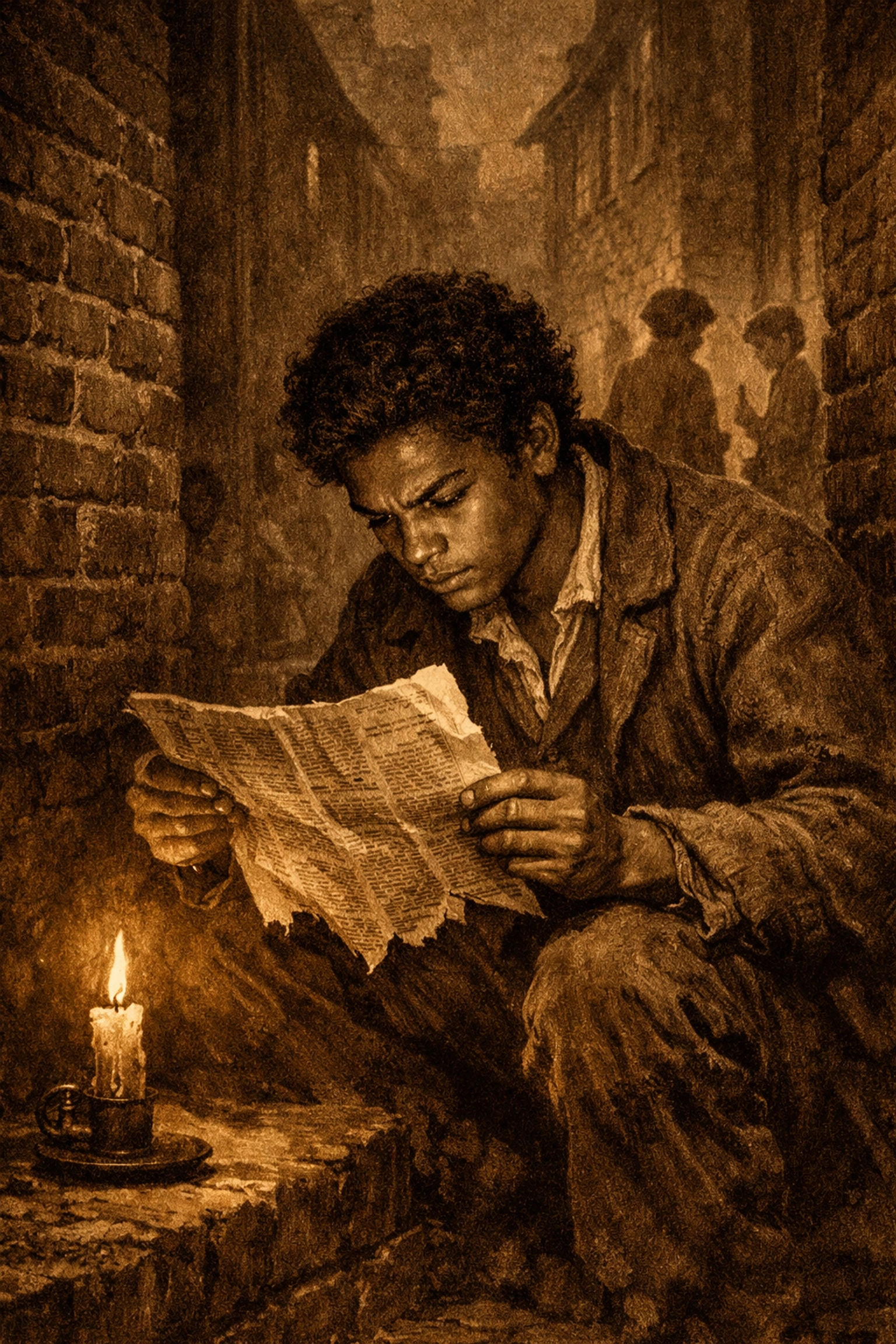
    One of the most dangerous things an enslaved person could do back then was learn to read. Knowledge was: and still is: power. Steward knew this. He didn’t have a classroom or a teacher; he had grit.

    He managed to learn to read in secret, often by the dim light of a candle or a dying fire when everyone else was asleep. He’d snag whatever scraps of paper or books he could find. This wasn’t just a hobby; it was his first step toward freedom. By learning to read, he could understand the laws that were supposed to protect people and realize that his situation wasn’t set in stone.

    A young man secretly reading a book by candlelight in a dark barn

    Fighting for Freedom in the Courts

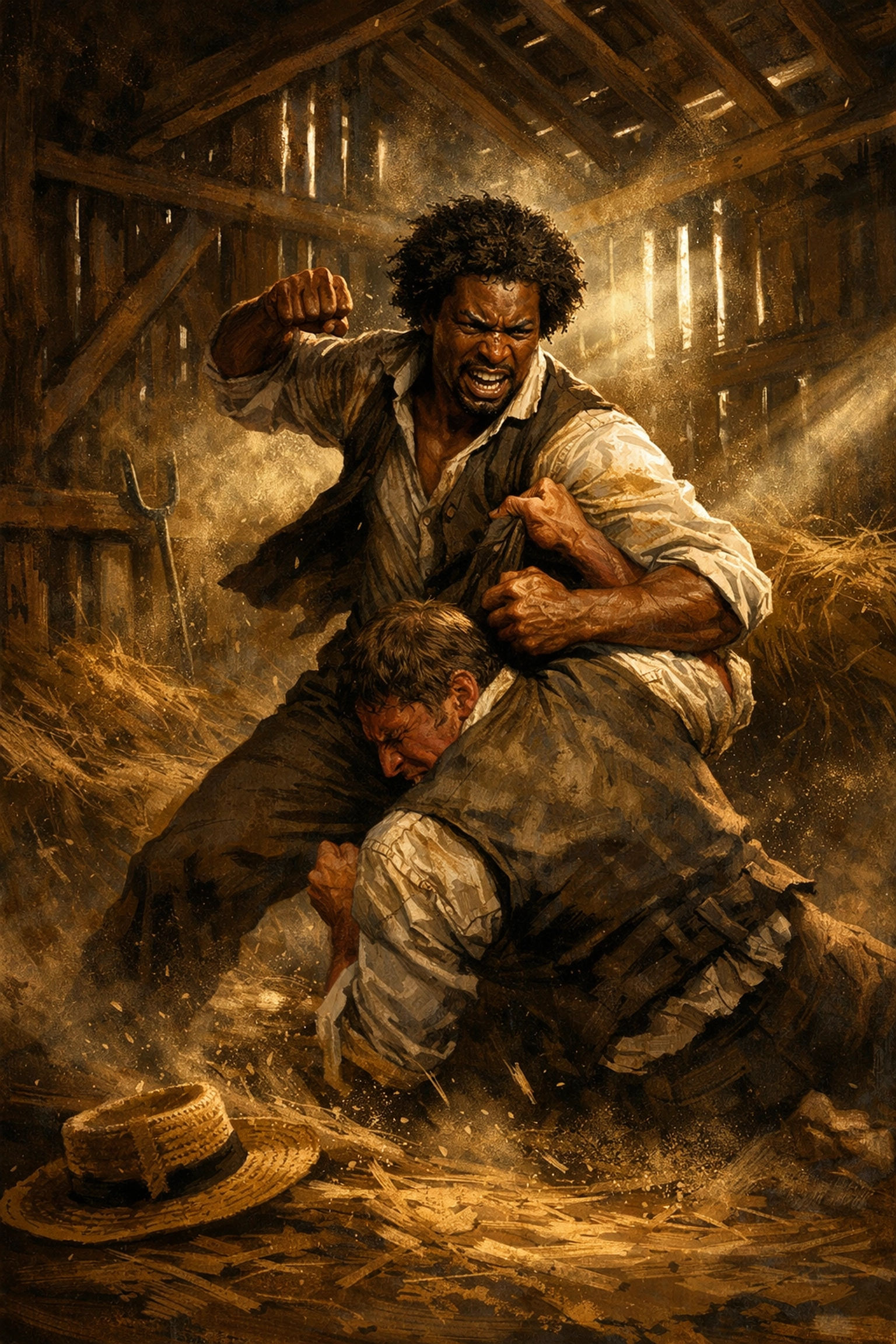
    Steward’s journey to being legally free is a masterclass in persistence. He didn’t just run away; he used the law. At the time, New York had a complex web of anti-slavery laws that were often ignored by slaveholders who moved into the state. Steward beat his master not with fists, but with legal strategy, timing, and help from people who understood exactly how to use New York law against an enslaver who had overplayed his hand.

    Here’s how Steward and his allies played the game:

    1. The 1785 Ban: This law prohibited the sale of enslaved people brought into New York.
    2. The 1799 Gradual Emancipation Law: This law put New York on the path toward ending slavery and gave freedom claims more legal ground than they had before.
    3. The 1800 Fisher v. Fisher Decision: This court ruling made the “hiring out” of enslaved people illegal, and that became the smoking gun in Steward’s case.

    That third point mattered a lot, because Captain William Helm had been renting Steward out to other farmers for labor. In other words, Helm was treating Steward like income-producing property in a way that directly clashed with the 1800 court decision. That gave Steward and his supporters the opening they needed. Helm may have thought he still controlled Steward, but by hiring him out, he had stepped into a legal trap.

    Steward wasn’t alone in this fight. He had the backing of the New York Manumission Society, a group committed to helping enslaved people press freedom claims through the courts. He also had crucial support from Darius Comstock, a Quaker activist in Farmington, New York. Comstock and his circle did more than offer sympathy. They helped shelter Steward, encouraged the legal challenge, and stood behind him while he pushed his claim.

    What makes this story even better is that Helm did not simply back down. He actually tried to sue Steward to reclaim him as property. But before the case could move forward, Helm died. That changed everything. With the enslaver gone and the legal pressure already working against him, Steward was left legally free around 1815.

    That freedom was not the end of the story; it was the beginning. After beating his enslaver through the law, Steward stayed in New York and built the life Helm could never have imagined for him. He went on to create a business empire in Rochester, proving that once he won control of his legal status, he was ready to turn freedom into economic power, leadership, and lasting influence.

    Building a Business Empire in Rochester

    Once he was free, Steward didn’t waste a second. He moved to Rochester, New York, which was a booming frontier town at the time. While many people were just trying to get by, Steward had bigger plans.

    He opened a meat market that eventually grew into a full-blown grocery store. Think about that for a second: a man who was once “owned” as property was now a business owner in one of the fastest-growing cities in America.

    It wasn’t easy. He faced racist attacks and harassment from people who couldn’t stand to see a Black man succeed. His store was vandalized, and he was threatened, but he stayed put. He became one of the most prominent Black businessmen in Rochester, proving that economic independence was a key part of true freedom.

    A bustling 19th-century street scene in Rochester featuring a grocery and meat market storefront

    A Leader, an Educator, and a Conductor

    Steward’s success in business was just the platform he used to help others. He believed deeply in “Black self-help.” He started a Sabbath school for Black children in Rochester because he knew that education was the key to breaking the cycle of poverty and oppression.

    He also became a major player in the “Convention Movement.” He helped lead the First Annual Convention of the People of Color in 1830. These weren’t just social clubs; they were strategic meetings where Black leaders from across the country met to talk about ending slavery and fighting for the right to vote.

    And if that wasn’t enough, he was also an active conductor on the Underground Railroad. His home and business were safe havens for people fleeing the South. He was putting his life and his livelihood on the line every single day.

    The Wilberforce Colony: A Dream of Autonomy

    In the early 1830s, Steward took a massive risk. He was asked to lead the Wilberforce Colony in Ontario, Canada. The idea was to create a self-governing community for Black people who wanted to escape the systemic racism of the United States.

    Steward moved his family to the Canadian wilderness to serve as the president of the colony. It was a beautiful dream, but it was incredibly difficult to manage. There were internal fights, financial issues, and the sheer struggle of building a town from scratch in the woods.

    While the colony didn’t last forever (Steward returned to Rochester in 1837), it was a bold statement. It showed the world that Black people were ready and able to govern themselves and build their own futures.

    A peaceful 19th-century settlement with log cabins in the Canadian forest

    The Author and the Friend of Frederick Douglass

    When you think of Rochester and abolition, you probably think of Frederick Douglass. And you’d be right! But what’s cool is that Steward and Douglass were part of the same powerful circle. While Douglass was the world-famous orator and publisher of The North Star, Steward was the established businessman and elder statesman of the Rochester Black community. They worked in the same circles, attended the same conventions, and shared the same goal: total abolition.

    In 1857, Steward published his life story: “Twenty-Two Years a Slave, and Forty Years a Freeman.” It’s one of the most important “slave narratives” ever written. He didn’t just talk about the horrors of slavery; he talked about the challenges of being free in a country that didn’t want you to be. It was a bestseller and helped open the eyes of many white Northerners to the reality of what Black Americans were facing.

    An antique leather-bound book titled Twenty-Two Years a Slave, and Forty Years a Freeman on a wooden desk

    Why Austin Steward Matters Today

    Austin Steward died in 1869, just a few years after the Civil War ended and slavery was finally abolished across the country. He lived to see the dream he fought for become a legal reality.

    His story is a reminder that freedom isn’t just a “given.” It’s something that people have to fight for using every tool available: education, business, community organizing, and the law.

    He was a businessman who wouldn’t be bullied, an author who wouldn’t be silenced, and a leader who wouldn’t stop until everyone was free. That’s a legacy worth remembering.

  • 10 Black Women Who Invented the Future (And How You Can Too)

    [HERO] Genius Unlocked: 10 Black Women Who Invented the Future (And How You Can Too)

    Ever wonder why your morning routine is so smooth? Or how you’re able to hop on a Zoom call while your GPS tells you exactly how many minutes you are from your next meeting? We often take the technology around us for granted, but here at the Law Office of Craig D. Carson PLLC, we’re obsessed with the “Aha!” moments that change the world.

    As a firm that works in advertising and business law, we see people with big ideas every single day. But today, I want to take a beat to celebrate ten Black women who didn’t just have big ideas: they built the foundation of the modern world. From the 19th-century pioneers who revolutionized the home to the modern-day geniuses powering our digital lives, these women are the reason your business (and mine) can function.

    Let’s dive into their stories and, more importantly, look at how you can protect your own stroke of genius.

    The Pioneers: Reinventing Daily Life

    In the late 1800s, getting a patent was a monumental task for anyone, let alone Black women living through the reconstruction era. Yet, they did it anyway. They saw problems and solved them with mechanical precision.

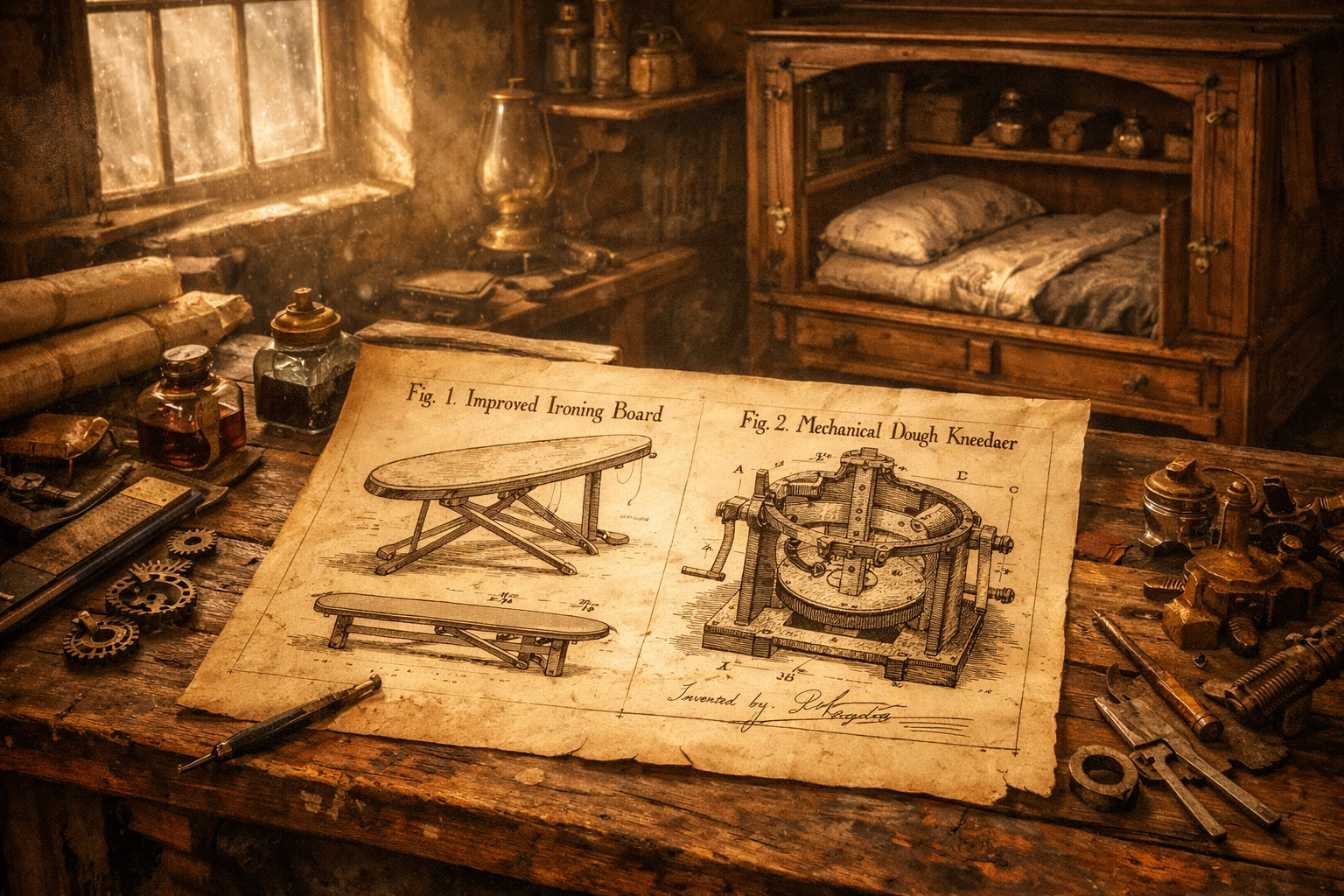
    1. Judy Reed: The Dough Kneader

    If you’ve ever enjoyed a perfectly textured loaf of bread, you can thank Judy Reed. In 1884, she became one of the first Black women to receive a U.S. patent. Her invention? An improved dough kneader and roller. Before Judy, this was a back-breaking manual labor task. She automated the “grind,” proving that even the most basic household chores were ripe for innovation.

    2. Sarah Goode: The Cabinet Bed

    Living in a cramped city apartment isn’t just a 2026 problem; it was a problem in 1885, too. Sarah Goode, a furniture store owner in Chicago, noticed her customers lived in tiny spaces. She invented the “Cabinet Bed”: a desk that folded out into a bed. Sound familiar? She basically invented the Murphy bed and the multi-functional furniture trend over a century before it was cool.

    3. Miriam Benjamin: The Gong Signal Chair

    Ever been in a restaurant and wished you could just press a button to get the server’s attention? Miriam Benjamin beat you to it in 1888. She patented the “Gong Signal Chair,” which allowed a person to press a button to alert an attendant. The U.S. House of Representatives eventually adopted a version of this. It’s the direct ancestor of the “call button” on airplanes today.

    4. Sarah Boone: The Ironing Board Improvement

    Before 1892, ironing sleeves and curved waistlines was a nightmare. Sarah Boone fixed that by redesigning the ironing board to be narrow and curved. It was a simple tweak that changed the garment industry forever. It’s a classic lesson for any small business owner: you don’t always have to reinvent the wheel; sometimes you just need to make the wheel fit the road better.

    Vintage patent illustrations of an ironing board and dough kneader in a 19th-century inventor's workshop.

    5. Lyda Newman: The Hairbrush

    Lyda Newman was a hairdresser and an activist who patented a new kind of hairbrush in 1898. It used synthetic bristles (which were more durable) and had a ventilated back that could be opened for easy cleaning. She revolutionized the beauty industry by focusing on hygiene and efficiency: two pillars of any successful service business.

    6. Ellen Eglin: The Clothes Wringer

    Ellen Eglin’s story is a bit of a cautionary tale for any entrepreneur. She invented a highly successful clothes wringer in the 1880s but sold the rights to a white agent for $18. Why? Because she knew that if people knew a Black woman invented it, white women wouldn’t buy it. While her tech moved the world forward, her story reminds us why owning and protecting your brand identity is so vital.

    7. Alice Parker: Central Heating

    Tired of shivering in your home office? In 1919, Alice Parker patented a natural gas-fueled furnace that paved the way for modern central heating. Before Alice, people relied on wood and coal fireplaces. Her vision for a centralized system changed how we build every home and office building in the world today.

    The Modern Legends: Powering Your Business

    Fast forward to the 20th and 21st centuries, and the innovations get even more “high tech.” If you’re reading this on Facebook, or if you’ve ever used a location-based ad to find a customer, these women are your heroes.

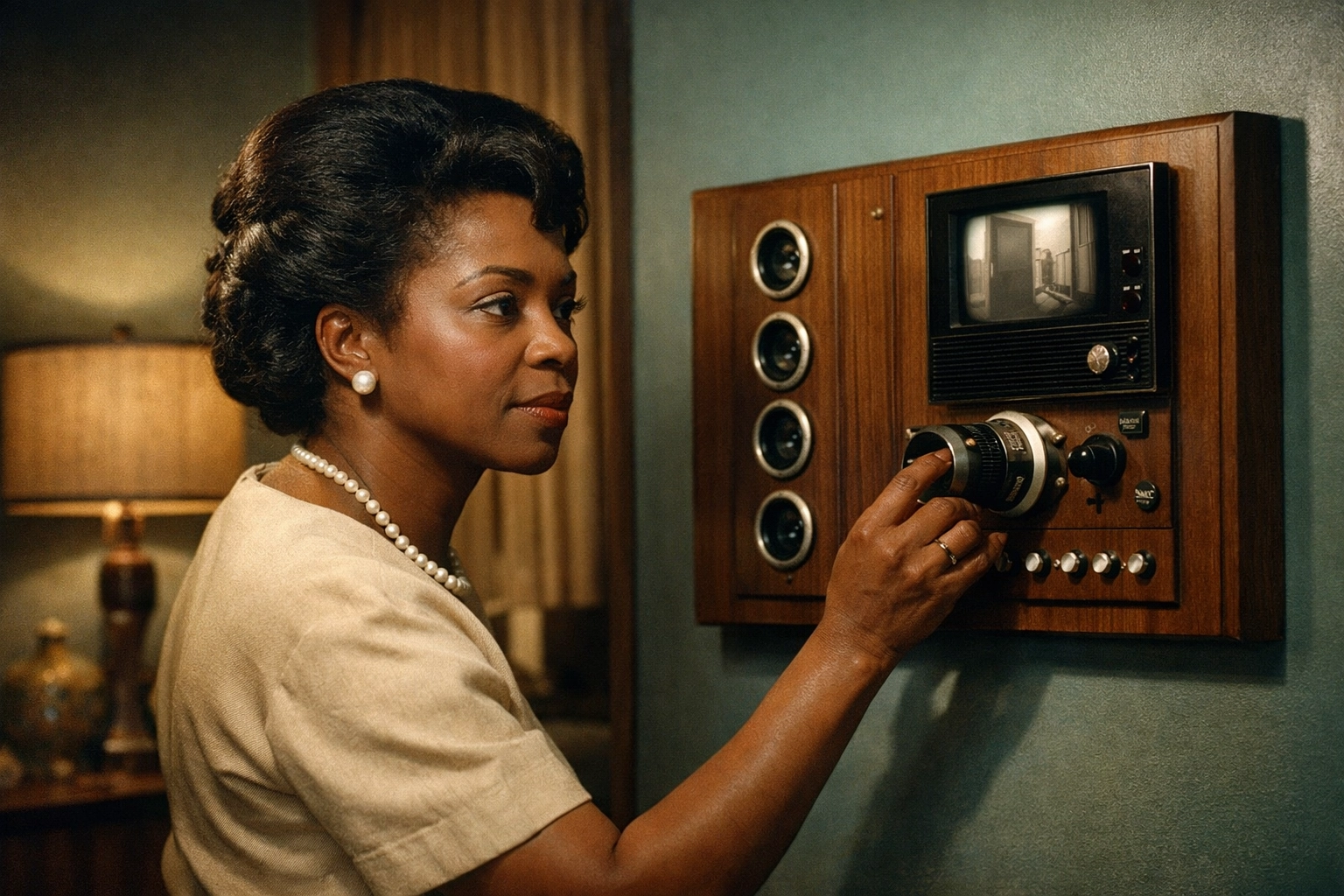
    8. Marie Van Brittan Brown: The Home Security System

    In 1966, Marie Van Brittan Brown, a nurse living in Queens, felt unsafe in her neighborhood. Instead of just complaining, she and her husband created the first home security system. It featured a motorized camera, a two-way microphone, and a button to trigger an alarm. Every Ring doorbell and ADT system on the market today is a direct descendant of Marie’s 1966 patent. She gave us the peace of mind to run our businesses from home safely.

    Marie Van Brittan Brown standing with her original home security system invention in the 1960s.

    9. Dr. Marian Croak: The Voice of the Digital Office

    If you’ve used Zoom, Microsoft Teams, or even just made a call over your internet connection today, you are using Dr. Marian Croak’s brain. She is a pioneer in VoIP (Voice over Internet Protocol). With over 200 patents to her name, she took the internet from a text-based tool to a communication powerhouse. Currently, she’s leading the charge on Responsible AI at Google. For small business owners, she is the reason we can work remotely and stay connected to clients across the globe without massive long-distance bills.

    Dr. Marian Croak surrounded by digital data streams representing VoIP and global communication technology.

    10. Dr. Gladys West: The GPS Mastermind

    Running ads on Facebook? Using “geofencing” to target customers within a five-mile radius of your shop? You owe a debt to Dr. Gladys West. As a mathematician at the U.S. Naval Weapons Laboratory, she did the complex calculations that led to the development of GPS (Global Positioning System). Without her work, there would be no Google Maps, no Uber, and certainly no location-based advertising. She literally put the world on a digital grid.

    Dr. Gladys West calculating the mathematical equations that led to the development of modern GPS.

    How You Can Protect Your “Aha!” Moment

    At the Law Office of Craig D. Carson PLLC, we don’t just admire these women; we learn from them. The common thread between the success of Dr. Gladys West and the missed opportunity of Ellen Eglin is Intellectual Property (IP) protection.

    In today’s fast-paced digital world: especially if you’re building a brand on social media or launching a new product: your ideas are your most valuable currency. Here is a simple guide to protecting your next big thing:

    1. Don’t Over-Share Early

    We get it. You’re excited. You want to post your new invention or business model on Facebook immediately. But wait! Publicly disclosing your idea before you’ve protected it can actually hurt your chances of getting a patent later. Keep your cards close to your vest until you’ve spoken to a pro.

    2. Document Everything

    Keep a “Founder’s Journal.” Document when you came up with the idea, how it evolved, and what problems it solves. This paper trail is invaluable if someone ever tries to claim your idea as their own.

    3. Understand Your Assets

    Is your idea a Patent (a new invention), a Trademark (your brand name or logo), or a Copyright (your creative work)? Many business owners get these confused. For example, Dr. Marian Croak owns patents for the tech, but companies trademark the names like “Zoom.” Knowing the difference helps you spend your legal budget wisely.

    4. Consult a Pro

    You wouldn’t try to perform surgery on yourself, so don’t try to navigate the USPTO (United States Patent and Trademark Office) alone. Whether you’re looking at advertising compliance or IP protection, having a legal partner ensures your “Aha!” moment stays yours.

    A glowing lightbulb secured in a glass vault representing intellectual property and patent protection.

    Final Thoughts: The Future is Yours

    The stories of these 10 women prove that innovation isn’t about having the most money or the biggest lab. It’s about seeing a problem: whether it’s a lumpy loaf of bread or a lack of security: and having the guts to build a solution.

    As we look toward the future of advertising and business, remember that the next world-changing idea might be sitting in your brain right now. Don’t let it stay there. Build it, protect it, and let it change the world.

    If you need help making sure your business ideas are legally sound and ready for the spotlight, give us a shout. At the Law Office of Craig D. Carson PLLC, we’re here to help you turn your genius into a legacy.

    Ready to unlock your potential? Let’s get to work.

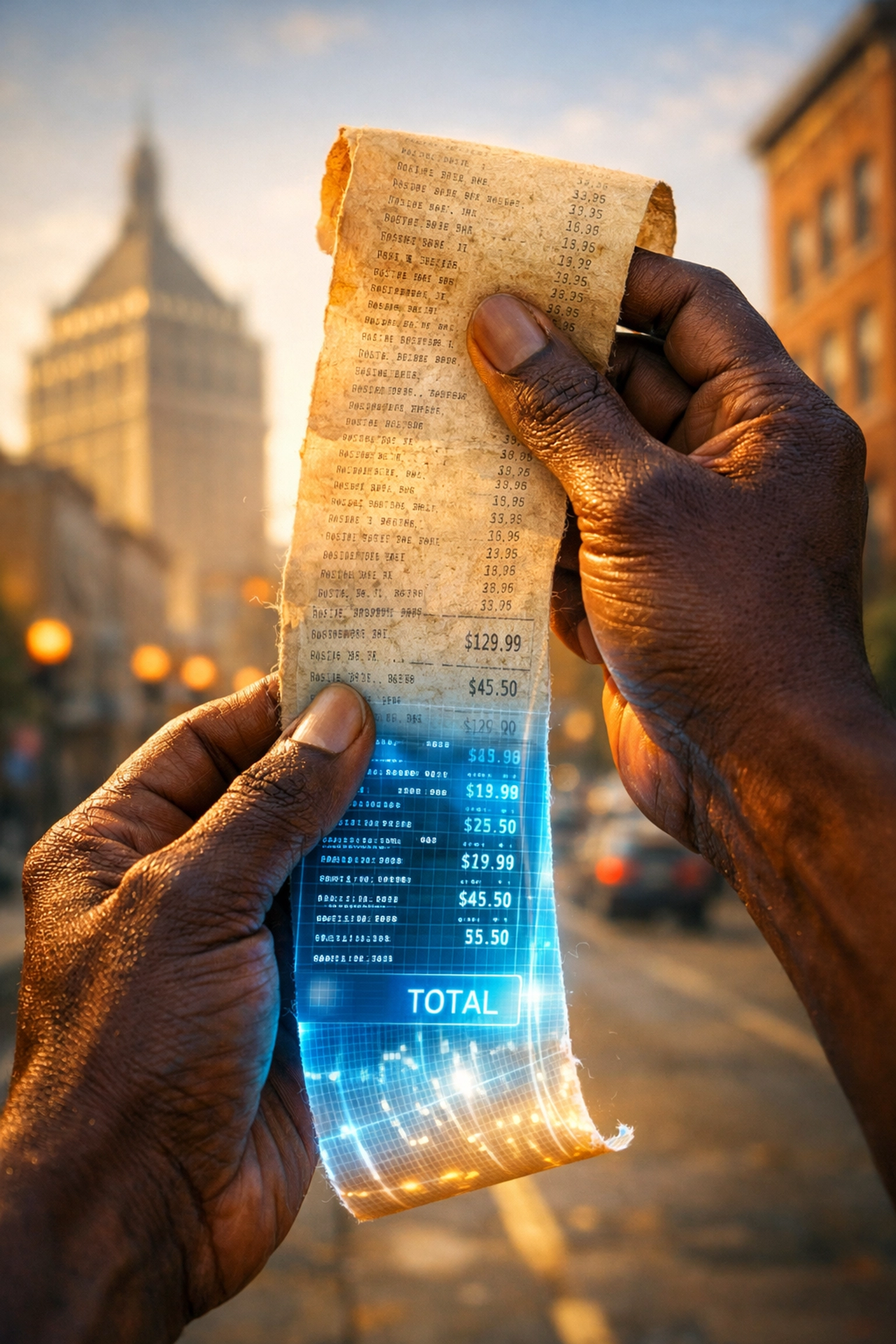
  • The Trillion-Dollar Receipt: Calculating the Economy of Slavery

    [HERO] The Trillion-Dollar Receipt: Calculating the Economy of Slavery

    When we talk about the history of the United States, we often hear about “pulling yourself up by your bootstraps.” We hear about the “American Dream” and the hard work that built this country into a global powerhouse. But for the Black community here in Rochester and in urban centers across the country, there’s always been a giant elephant in the room: who actually did the work, and where did the money go?

    At the Community Justice Initiative, we believe in getting the facts straight. To understand why our neighborhoods look the way they do today, we have to look at the “receipt.” We aren’t just talking about a few bad years of history; we’re talking about a trillion-dollar debt that has never been settled.

    Let’s break down the math of how slavery didn’t just support the U.S. economy: it was the U.S. economy.

    410 Billion Hours of Overtime

    If you’ve ever worked a double shift or a 60-hour week, you know how exhausting that is. Now, imagine that labor being done by millions of people for over two centuries without a single paycheck, a day off, or a retirement plan.

    Researcher J. David Hacker did the heavy lifting on these numbers. His research indicates that enslaved people provided roughly 410 billion hours of unpaid labor between 1619 and 1865.

    Think about that number for a second. 410 billion. If you were to try and count to a billion, it would take you about 31 years. Now multiply that by 410. That is the sheer volume of human life, sweat, and energy that was poured into building the infrastructure, the agriculture, and the wealth of this nation for free.

    When we talk about the “wealth gap” in Rochester today, we are looking at the direct result of 410 billion hours of stolen time. That’s time that wasn’t used to build Black businesses, save for homes, or pass down an inheritance. It was time used to build someone else’s empire.

    Hourglass showing 410 billion hours of stolen labor building a 19th-century city empire.

    More Valuable Than Every Railroad and Factory

    There’s a common myth that slavery was just a “Southern thing” and that the North was built on modern industry like factories and railroads. The data shows something much more connected and much more sinister.

    In the mid-1800s, enslaved people were the largest financial asset in the entire U.S. economy. If you took all the money invested in every railroad in America and every factory in the North and added them together, they still wouldn’t be worth as much as the value placed on the bodies of enslaved Black people.

    In 1860, the total value of enslaved people as capital assets was estimated between $2.7 and $3.7 billion. In today’s money, that is an astronomical sum, but even back then, it meant that the “wealth” of the country was literally tied to human bondage. This wasn’t a side hustle for the American economy; it was the foundation.

    Banks in New York (and even those that eventually had ties to our region) used enslaved people as collateral for loans. Insurance companies wrote policies on them. The textile mills in the North ran on the cotton picked in the South. The whole system was a giant machine designed to turn Black labor into white generational wealth.

    Driving the National Growth

    Some people try to argue that slavery was a “dying institution” or that it wasn’t that important to the overall growth of the U.S. The research by Stelzner and Beckert tells a different story.

    Between 1839 and 1859, the United States saw a massive jump in its national commodity output (the stuff the country produces and sells). According to their research, slavery accounted for roughly 12% to 24% of that entire increase.

    Despite making up only about 12% of the population by 1859, the work done by enslaved people was driving nearly a quarter of the country’s economic growth. They were punching way above their weight class while being given nothing in return. They were the engine of the American economy, but they weren’t allowed to drive the car: and they certainly didn’t get to keep any of the gas money.

    Industrial gears and a ledger book representing enslaved people as the engine of the U.S. economy.

    The $20 Trillion Bill

    So, what is the total “receipt” worth today? If we actually sat down to calculate the back pay, what would it look like?

    Dr. Thomas Craemer, a researcher at the University of Connecticut, decided to do exactly that. He didn’t just look at the hourly wage; he looked at the value of that unpaid labor and compounded it with interest over time. Because, let’s be real, if you owe someone money for 150 years, you’re going to owe some serious interest.

    Dr. Craemer’s research estimates the value of unpaid slave labor between 1776 and 1865 at $14 trillion to $20 trillion in today’s dollars.

    To put that in perspective, $20 trillion is roughly the size of the entire U.S. Gross Domestic Product (GDP). It is a number so large it’s hard to wrap your head around. But it represents the “missing wealth” in our communities. When you walk through neighborhoods that have been redlined or see schools that are underfunded, remember that $20 trillion receipt. That is the capital that was supposed to be in our pockets, in our banks, and in our businesses.

    The Myth of Efficiency: Slavery Was Actually Holding Us Back

    One of the most interesting pieces of modern research shows that slavery wasn’t just cruel: it was actually inefficient.

    We often hear that the South was “rich” because of slavery, but it was a fake kind of wealth that only benefited a few people at the top. Research indicates that Emancipation actually led to a potential productivity gain of 4% to 35%.

    Why? Because the system of slavery was inherently broken. It relied on coercion, violence, and keeping people from learning or innovating. It created a “deadweight loss” for the economy. When people are free to choose their work, to innovate, and to be paid for their ideas, the whole economy grows faster.

    This means that slavery didn’t just steal from Black people; it actually slowed down the economic potential of the entire region. The “elites” of the 1800s were so addicted to the power of owning people that they were willing to hold back the entire country’s progress just to keep their status.

    Mural of shattering chains transforming into a thriving urban community representing economic liberation.

    Why This Matters for Us in Rochester

    You might be wondering, “Why are we talking about the 1800s in 2026?”

    We’re talking about it because wealth doesn’t just disappear. It moves. The wealth created by those 410 billion hours of labor was used to build universities, to fund the industrial revolution, and to create the suburban developments that many Black families were later banned from entering.

    In Rochester, we see the remnants of this every day. We see it in the “Old Money” that still dictates much of the city’s direction. We see it in the gap between the wealth in the suburbs and the poverty in the city center. That gap isn’t an accident, and it isn’t because people aren’t “working hard enough.”

    It’s because one group of people got a $20 trillion head start, and the other group was handed the bill.

    Understanding the “Trillion-Dollar Receipt” changes the conversation from “charity” to “justice.” When we talk about reparations, we aren’t asking for a handout. We are asking for the check to be settled.

    Final Thoughts

    The data is clear. The American economy was built on a foundation of stolen labor and human capital that outweighed the value of all Northern industry combined. From the 12-24% of national growth to the $20 trillion in compounded back pay, the numbers don’t lie.

    At the Community Justice Initiative, we’re going to keep bringing these facts to the forefront. Because you can’t have “Justice” without “Just-Us” knowing the truth about where we’ve been and what is actually owed.

    Keep your eyes on the receipt. It’s time for the bill to be paid.

    The Modern Fight for Reparations (and Why It’s Not “Ancient History”)

    A lot of folks in Rochester hear “reparations” and think it’s either impossible, too complicated, or something that has nothing to do with the budget decisions being made right now. But reparations isn’t just a history conversation—it’s an active policy fight, happening in Congress, in states like California, and here in New York.

    If we can calculate the “receipt,” we can also talk about the “settlement.” And that means getting clear on what’s on the table today.

    H.R. 40: The Bill That’s Been Waiting Since John Conyers

    H.R. 40 is the federal bill that would create a commission to study slavery and its lasting harms and to develop reparations proposals for African Americans. People hear “study” and roll their eyes, but this matters because the U.S. government has a long history of ignoring harm until it’s officially documented, costed out, and forced into the public record.

    Here’s the key part Rochester should know: H.R. 40 was first introduced in 1989 by Congressman John Conyers (Detroit) and he reintroduced it year after year for decades. The “40” is a reminder of the broken promise of 40 acres and a mule—a promise made, then snatched back.

    After Conyers, other members of Congress carried the torch. The bill has gained more attention in recent years, but it still hasn’t become law. That’s why local pressure matters—because federal politicians move when communities keep pushing.

    Who Qualifies? Race-Based vs. Lineage-Based Eligibility (California as a Real Example)

    One of the biggest debates in the reparations space is eligibility—basically, who should receive reparations and how we define that fairly.

    Two common models show up again and again:

    1) Race-based models

    This approach focuses on harms tied to being Black in America, including slavery and the long tail that followed: Jim Crow, redlining, job discrimination, school segregation, predatory lending, and more.

    What people like about it: it recognizes that anti-Black policy hit broadly and systemically, not just in one family line.

    What critics raise: questions about where to draw the line (for example: immigrants vs. multi-generation Black families, or how to handle proof).

    2) Lineage-based models

    This approach ties eligibility to being able to prove descent from enslaved people in the United States (often framed as “ADOS” — American Descendants of Slavery).

    California is a well-known example of a lineage-centered approach in practice. California’s reparations work has focused on defining eligibility around descendants of enslaved people in the U.S., and it has pushed the conversation toward documentation, genealogy, and state responsibility for specific harms.

    What people like about it: it tries to target the group that experienced the original theft and the policies built directly on top of it.

    What critics raise: documentation barriers (especially when records were destroyed, names were changed, or families were separated), and whether it fully addresses harms that continued long after slavery for Black people more broadly.

    For Rochester, this isn’t abstract. How eligibility is defined changes what a program looks like—cash payments, housing grants, business capital, tuition support, tax credits, land restoration, mental health supports—because the size and scope depends on who is included.

    Bringing the Receipt Home: The New York Fight

    It’s easy for reparations to feel like a D.C. conversation that never lands here. But New York is where a lot of the real “show your work” stuff is happening—public hearings, testimony, and local receipts getting put on the record city by city.

    And for us at Community Justice Initiative, this is the part that matters most: New York communities are documenting the harm in plain language, so the state can’t pretend it’s all abstract.

    Rochester: March 2025 @ the Memorial Art Gallery — Urban Renewal, Clarissa Street, and the Inner Loop

    Rochester showed up in March 2025 at a public hearing held at the Memorial Art Gallery. A big theme that came through was “Urban Renewal”—and folks weren’t talking about it like a cute city-planning term. They were talking about it as displacement.

    Testimony centered the destruction of the Clarissa Street neighborhood and the building of the Inner Loop, which together displaced over 4,200 households. That’s not “revitalization.” That’s the state and city deciding who gets to stay, who gets moved, and who gets to build wealth.

    If you’re wondering why certain families in Rochester never got to pass down a home, why certain business corridors disappeared, or why poverty got concentrated where it did—this is a major part of the answer.

    Buffalo: November 2024 @ Elim Christian Fellowship — Environmental Racism and Wealth Loss

    Buffalo hosted the first-ever New York State public hearing in November 2024 at Elim Christian Fellowship—and the focus hit a topic a lot of people feel but don’t always have a name for: environmental racism.

    The testimony connected the dots between toxic pollutants, redlining, and the long-term damage to Black wealth in Buffalo. When certain neighborhoods get boxed into pollution, highways, and bad infrastructure, it’s not just health impacts—it’s property value, business investment, insurance costs, and whether families can build any equity at all.

    That’s the “receipt” in real life: the environment, the map, and the money all tied together.

    Syracuse: August 2025 @ Onondaga Community College — Land Theft and Loss of Black Land Ownership

    In August 2025, Syracuse held a hearing at Onondaga Community College with a specific focus: land theft and the loss of Black land ownership.

    This part matters because land isn’t just “property.” Land is stability. Land is collateral. Land is the difference between being able to start something (a business, a farm, a rental property, a family home) and being stuck renting forever with nothing to pass down.

    When Black land gets taken—through scams, discriminatory lending, tax foreclosure pressure, legal games, or straight-up policy—generational wealth gets cut off at the knees. Syracuse put that reality on the record.

    NYC: “Reparations Now” + A Longer Runway for the Commission Report (Extended to Early 2027)

    New York City has its own track too. Council Members Crystal Hudson and Nantasha Williams introduced the “Reparations Now” legislative package, pushing steps that are both symbolic and material—things like public apologies, memorials, and plans aimed at closing gaps in housing and healthcare.

    And NYC is also taking time to do this right: the NYC reparations commission’s report timeline has been extended to early 2027 to allow a deeper, more thorough dive. That’s important, because rushing a report is how you end up with performative recommendations and no real repair.

    The Timeline: What New York State Is Targeting Next

    On the state side, the New York State Commission—chaired by our own Dr. Seanelle Hawkins—is working on a real timeline, not just talk.

    Here’s what the community should know:

    • Draft report هدف: June 2026
    • Final legislative recommendations due: January 2027

    That means right now is the window where public testimony and local documentation still has the power to shape what ends up in the final recommendations. This is the part where Rochester (and every upstate city) has to stay loud, organized, and consistent.

    Haiti’s “Independence Debt”: When Reparations Went the Wrong Direction

    If anybody ever says, “Reparations has never happened,” Haiti is proof that it has—but in the most backwards, unjust way possible.

    After Haiti won its independence from France (the first Black republic born out of a successful slave revolution), France demanded Haiti pay an “indemnity” to compensate the former enslavers for their “loss of property.” Haiti was essentially forced to pay for its own freedom—often described as the Independence Debt.

    That is reparations in reverse:

    • the oppressed had to pay the oppressor
    • wealth was extracted from a Black nation for generations
    • development was delayed because national revenue went to debt payments instead of schools, roads, healthcare, and business growth

    For Rochester folks, the lesson is clear: when harm is “settled” the wrong way, it locks in inequality for a long time. Reparations is not some wild idea—it’s a question of who pays whom, and whether justice flows to the people who actually did the labor and took the damage.

    Different Reparations Strategies: N’COBRA, NAARC, and ADOS (Same Goal, Different Playbooks)

    Even in our own community, you’ll hear different approaches. That doesn’t have to mean division—but we should be honest about the differences so we can organize smart.

    N’COBRA (National Coalition of Blacks for Reparations in America)

    N’COBRA is one of the long-standing organizations in this space. Their approach is broad and injury-based: slavery, plus the systems that followed it (Jim Crow, redlining, mass incarceration, wealth stripping). They’ve pushed hard for federal action and for reparations to be treated like a serious national obligation—not charity.

    NAARC (National African American Reparations Commission)

    NAARC promotes a structured framework (often referenced as a multi-point plan) that focuses on repairing harms across multiple categories—things like education, health, housing, criminal justice, and economic development. Their approach is also strongly oriented toward policy and governance, making sure reparations is not reduced to one-time checks without systemic repair.

    ADOS (American Descendants of Slavery)

    ADOS is known for a more explicitly lineage-centered approach. Their focus is that reparations should be targeted specifically to descendants of people enslaved in the United States, and they emphasize eligibility rules that prevent the issue from becoming so broad that the original harmed group gets diluted or pushed aside.

    In Rochester, we can hold space for these differences while staying locked in on the bigger point: the receipts are real, the harm is measurable, and our communities deserve repair that matches the scale of what was taken.

    Final Thoughts

    The data is clear. The American economy was built on a foundation of stolen labor and human capital that outweighed the value of all Northern industry combined. From the 12-24% of national growth to the $20 trillion in compounded back pay, the numbers don’t lie.

    At the Community Justice Initiative, we’re going to keep bringing these facts to the forefront. Because you can’t have “Justice” without “Just-Us” knowing the truth about where we’ve been and what is actually owed.

    Keep your eyes on the receipt. It’s time for the bill to be paid.

    Hands holding a long reparations receipt on a Rochester street, symbolizing the settlement of historical debt.
  • [HERO] Frederick Douglass: The Lion of Anacostia and the Quest for Freedom

    Frederick Douglass wasn’t just a former slave who became free. He was a man who beat the system, fought back literally and figuratively, and became one of the most important voices in American history. His story is raw, complicated, and honestly more incredible than most people realize.

    A Mother He Barely Knew

    Frederick Augustus Washington Bailey was born into slavery around 1818 in Maryland. His mother, Harriet Bailey, was a slave who worked on a nearby plantation. Here’s the heartbreaking part: Frederick only saw his mother a handful of times in his entire childhood. She had to walk twelve miles at night after working all day just to see her son, and she’d have to be back before sunrise or face brutal punishment.

    She died when Frederick was around seven years old. He didn’t get to attend her funeral. He didn’t even know she had passed until well after the fact. This separation of mothers from their children was standard practice in slavery: a deliberate tactic to break family bonds and make people easier to control.

    Young Frederick Douglass learning to read by candlelight in 1830s Baltimore

    Baltimore: Learning to Read Changes Everything

    When Frederick was about eight years old, he was leased out to the Auld family in Baltimore. This move changed his life. Sophia Auld, his owner’s wife, started teaching him to read until her husband shut it down fast. “Learning will spoil the best slave,” Hugh Auld told her.

    But it was too late. Frederick had caught the reading bug. He traded bread with poor white kids on the streets of Baltimore in exchange for reading lessons. He studied newspapers, scraps of text, anything he could get his hands on. He copied letters from ship timber at the shipyard where he worked. That hunger for knowledge became his weapon.

    The Fight That Changed Him

    In 1834, Frederick was sent to work for Edward Covey, a farmer known as a “slave breaker.” Covey’s job was to beat the spirit out of slaves who were considered troublesome. He whipped Frederick regularly, trying to break him down.

    But one day in August 1834, something snapped. After months of abuse, Frederick fought back. The two men fought for nearly two hours: a brutal, physical battle where Frederick refused to back down. Covey never touched him again.

    “It rekindled the few expiring embers of freedom,” Douglass later wrote. That fight wasn’t just physical resistance. It was Frederick reclaiming his humanity. It proved to him that he could stand up, that he wasn’t property, that he was a man.

    Frederick Douglass fighting slave breaker Edward Covey in 1834 barn confrontation

    The Underground Railroad and Freedom

    By 1838, Frederick had had enough. He was back in Baltimore, and he started planning his escape. On September 3, 1838, dressed as a sailor and carrying borrowed identification papers, Frederick boarded a train heading north. The expanding railroad system made his escape possible: trains moved faster than pursuers could follow.

    Within twenty-four hours, he was in New York. He was free. He changed his last name from Bailey to Douglass to avoid slave catchers. The man who had been beaten, separated from his mother, and treated like property was now Frederick Douglass: and he was about to become a force of nature.

    The North Star: His Own Voice

    In 1847, Douglass started his own abolitionist newspaper, The North Star, in Rochester, New York. The motto said it all: “Right is of no Sex: Truth is of no Color: God is the Father of us all, and we are all brethren.”

    And it wasn’t just words. The North Star was a real operation with real addresses. Early on, the paper was produced out of Rochester’s Talman Building (25 East Main Street)—one of the most famous physical “Douglass landmarks” in the city. Over the years, as the paper evolved and the operation shifted, Rochester stayed the hub: the editorial work, printing, and distribution were rooted in the city even as titles and business arrangements changed.

    This wasn’t just a newspaper. It was Douglass claiming his narrative and giving a platform to the abolitionist cause written by a Black man who had lived through slavery—and doing it in a Northern city close enough to Canada that the stakes stayed very real.

    Financially, it was a grind. One reason it survived in the early years was help from allies who knew how fragile Black-owned publishing could be. Martin R. Delany—coming off the collapse of his own Pittsburgh newspaper, The Mystery—threw support behind The North Star and worked with Douglass in the project’s early run. The paper later changed names and formats (including Frederick Douglass’ Paper), but that Rochester start—and that hustle to keep it alive—was the foundation.

    Revolutionary Friendships: John Brown and Martin Delany

    Douglass had complicated relationships with some of the most radical freedom fighters of his time.

    John Brown was the white abolitionist who believed armed rebellion was the only way to end slavery. Brown and Douglass met multiple times, and Brown tried hard to recruit Douglass for his raid on Harpers Ferry in 1859. Douglass refused: he thought the plan was suicide. He was right. Brown was captured and hanged, and Douglass had to flee to Canada temporarily because authorities thought he was involved.

    Martin Delany was a Black nationalist who believed African Americans should emigrate to Africa or the Caribbean because America would never truly accept them. Douglass disagreed. He believed in fighting for full citizenship and equality in America. Despite their philosophical differences, they respected each other’s dedication to Black freedom—and they also overlapped in practical ways, especially in the world of Black journalism. After Delany’s Pittsburgh newspaper, The Mystery, collapsed, he backed Douglass’s Rochester project, The North Star, and worked with him in its early days, helping keep the paper (and its message) moving.

    Anna Murray Douglass: The Woman Who Made It Possible

    Let’s be clear: Frederick Douglass doesn’t escape slavery without Anna Murray. She was a free Black woman working as a domestic servant in Baltimore when she met Frederick. She didn’t just support his escape: she funded it. She sold her feather bed and gave him the money to buy his train ticket and sailor’s disguise.

    They married in New York just days after his escape. Anna couldn’t read or write, but she was sharp, resourceful, and kept the Douglass household running for forty-four years while Frederick traveled the country giving speeches. She raised their five children largely alone, managed their finances, and dealt with constant threats from slave catchers and racist neighbors.

    While Frederick became famous, Anna stayed in the background by choice. She didn’t want the spotlight. But make no mistake: she was the backbone of everything Frederick accomplished. When she died in 1882, Frederick was devastated. He remarried two years later to Helen Pitts, a white woman, which caused enormous controversy.

    Talking Truth to Power: Lincoln Meetings

    Douglass met with President Abraham Lincoln three times during the Civil War. These weren’t friendly chats. Douglass pushed Lincoln hard on the treatment of Black soldiers, equal pay, and what freedom would actually look like after the war.

    During their first meeting in 1863, Douglass confronted Lincoln about the unequal pay for Black soldiers: they were getting about half what white soldiers earned. Lincoln listened. The meetings didn’t solve everything immediately, but Lincoln respected Douglass enough to actually hear him out. Douglass later said Lincoln was “the first great man that I talked with in the United States freely, who in no single instance reminded me of the difference between himself and myself, of the difference of color.”

    Fighting for Rosetta

    Douglass didn’t just fight for freedom in abstract terms. When his daughter Rosetta was kicked out of a private school in Rochester, New York, in 1848 simply because she was Black, Frederick went to war. He wrote scathing articles, gave speeches, and pushed back hard against the school’s racism.

    That same Rochester period also produced some of his most famous public moments. On July 5, 1852, at Corinthian Hall in Rochester, Douglass delivered the speech that still hits like a punch: “What to the Slave Is the Fourth of July?” It’s one of the clearest, most brutal explanations of American hypocrisy ever put into words—Douglass basically telling a crowd celebrating liberty that the holiday was a mockery while millions stayed in chains.

    And it’s also where you see how wide his “equal rights” lens really was. Douglass wasn’t only an abolitionist; he was a women’s rights ally, too. He supported women’s suffrage early, attended the 1848 Seneca Falls Convention, and spoke up when it mattered—backing the push to include the right to vote in the movement’s demands. Through the 1850s women’s rights conventions (including gatherings in upstate New York that built on Seneca Falls), Douglass kept showing up as a public supporter, tying women’s equality to the same basic principle he argued everywhere: rights are rights, and nobody gets to ration them out.

    His Rochester years also plugged him into a strong Black activist network that didn’t always agree with him at first. One key figure was Austin Steward, a formerly enslaved man turned Rochester businessman and abolitionist. Steward and other Black leaders in the area pushed community self-reliance, education, and institution-building, and Douglass—who initially leaned hard into integration strategies—had to learn, adjust, and collaborate. Their relationship wasn’t about hero worship; it was more like a reality check from people already doing the work on the ground in Rochester.

    Rosetta eventually became a teacher herself and a women’s rights activist. She fought for both racial and gender equality, carrying on her father’s legacy.

    Haiti: Diplomat Years

    In 1889, President Benjamin Harrison appointed Douglass as U.S. Minister to Haiti. At age 71, Douglass became America’s ambassador to the first Black republic in the Western Hemisphere. He served for two years, navigating complicated negotiations between Haiti and U.S. business interests.

    It was a fitting role for a man who had spent his life fighting for Black freedom and dignity. Though his tenure had challenges: he resigned in 1891 over disagreements with U.S. policy: it showed how far he’d come from that scared child separated from his mother.

    Ida B. Wells: Passing the Torch

    Near the end of his life, Douglass formed a friendship with Ida B. Wells, the fierce journalist and anti-lynching crusader. When Wells was exiled from Memphis for her investigations into lynching, Douglass supported her work. He wrote the introduction to her pamphlet “Southern Horrors” and encouraged her activism.

    Wells later recalled that Douglass told her, “You have done something that I have not been able to do.” He saw in Wells the next generation of fighters who would continue the battle he’d been waging for decades.

    Unknown Facts About the Lion

    • Most photographed man of the 19th century: Douglass sat for more portraits than even Lincoln. He believed controlling his image was a form of resistance.
    • He never learned his actual birthday: He chose February 14 as his birthday, though he didn’t know the real date.
    • He played the violin: Music was one of his lifelong passions.
    • His sons fought in the Civil War: Charles and Lewis both served in the famous 54th Massachusetts Infantry Regiment.
    • He lived in Ireland and England: To escape slave catchers after publishing his autobiography in 1845, he spent nearly two years abroad giving speeches.
    • His Rochester home burned in 1872: While he was away in Washington, D.C., Douglass’s longtime Rochester house was destroyed by fire in 1872, and he suspected it was set deliberately. Beyond the personal shock, the fire also meant the loss of an enormous amount of papers and history—letters, records, and pieces of his life’s work.

    Frederick Douglass died on February 20, 1895, at his home in Anacostia. He’d spent the day at a women’s rights convention. Even at 77, he was still fighting.

    From a child who barely knew his mother to the Lion of Anacostia: a self-educated intellectual, newspaper publisher, presidential advisor, and diplomat: Frederick Douglass proved that freedom isn’t given. It’s taken, defended, and fought for every single day.

    His legacy isn’t just history. It’s a blueprint for resistance.

  • The 75-Country Freeze: New Ban, Old RACIST Playbook?

    [HERO] The 75-Country Freeze: New Ban, Old Playbook?

    On January 21, 2026, the Trump administration dropped a bombshell: a visa freeze affecting 75 countries. No temporary hold. No clear end date. Just an indefinite pause that’s keeping families separated and dreams on hold.

    Here’s the thing that jumps out when you look at the list: the overwhelming majority of these 75 countries share something in common. They’re in Africa, the Caribbean, Latin America, and the Middle East. They’re what we might call Black, Brown, and Melanated nations. Meanwhile, European countries? They’re sitting pretty, largely exempt or handled with what the administration calls “geopolitical sensitivity.”

    If this feels familiar, that’s because it is. We’ve seen this movie before: and the script hasn’t changed much in over 200 years.

    Black and Brown travelers at airport terminal holding passports during travel ban
    Illustration showing Trump-like figure crossing out Black and Latino visa applicants to convey exclusion from visa bans

    What’s Actually Happening Right Now

    The policy relies on something called the “public charge” rule. Essentially, if the government thinks you might use public benefits like healthcare, food assistance, or housing support, they can deny your visa. Sounds reasonable on the surface, right? Thproblem is how broadly they’re applying it.

    We’re talking about visa denials based on age, weight, English proficiency, health conditions, and whether someone might need medical care down the road. Under a November 2025 State Department cable, consular officers have been instructed to scrutinize applicants using an incredibly wide lens. If you’re older? Red flag. If you don’t speak perfect English? Red flag. If you have a chronic health condition? You might be deemed too risky.

    The public charge provision isn’t new: it’s been around for decades. But the scope keeps changing based on who’s in office. Trump expanded it dramatically in 2019 to include programs like SNAP, Medicaid, and housing vouchers. Biden narrowed it back down in 2022, focusing mainly on cash assistance and long-term institutional care. Now, we’re back to the broader interpretation, cranked up to eleven.

    This isn’t a temporary freeze. The State Department says it’ll continue “indefinitely until the department conducts a reassessment.” Translation: nobody knows when this ends.

    Black student with acceptance letter facing visa restrictions and barriers

    The Numbers Don’t Lie

    Let’s talk about who’s actually affected. Of the 75 countries on this list, the vast majority are African nations. Add in Caribbean countries like Haiti, Latin American nations, and Middle Eastern countries, and you’ve got a clear demographic pattern.

    These aren’t just statistics. We’re talking about students who got accepted to American universities but can’t get here. We’re talking about families trying to reunite. We’re talking about professionals with job offers who are stuck in limbo. And overwhelmingly, these are Black and Brown people.

    Now compare that to how European countries are being handled. Countries in Western Europe aren’t facing these blanket restrictions. When issues come up with European visa applicants, they’re addressed with what officials call “case-by-case” review and “diplomatic consideration.” Different rules for different folks.

    The official explanation centers on “national security” and concerns about people becoming “public charges.” But when you look at the demographics of who’s banned versus who’s not, it’s hard not to see a pattern.

    Haitian revolutionaries in 1804 facing diplomatic isolation after independence

    A History Lesson: Haiti and the First Black Republic

    To understand what’s happening today, we need to rewind to 1804. That’s when Haiti did something revolutionary, literally. Enslaved Africans rose up, defeated their colonizers, and established the world’s first free Black republic.

    You’d think the world would celebrate. Instead, Haiti got the silent treatment. For nearly 60 years, the United States and European powers refused to recognize Haiti as a legitimate nation. Why? Because a successful, free Black republic was terrifying to countries built on slavery and colonialism.

    The U.S. didn’t recognize Haiti until 1862: and that was only after the Civil War had already started and Southern states had seceded. France demanded reparations from Haiti (you read that right: the victims had to pay their former oppressors) and didn’t fully recognize the country until 1825, and even then, with strings attached.

    Haiti faced economic embargoes, political isolation, and constant interference. The message was clear: a free Black nation couldn’t be allowed to succeed because it would inspire others. The playbook was isolation, economic pressure, and diplomatic freeze-out.

    Sound familiar?

    World map showing 75-country visa ban concentrated in Africa and Caribbean

    The 75 Countries (Most Notable + Full List)

    The government is calling it a 75-country “freeze,” so here’s a clear breakdown. First, the countries people are talking about most (because of the demographics and who’s getting hit hardest), then the full list.

    Most talked-about countries (demographic focus)

    Somalia, Haiti, Sudan, Nigeria, Egypt, Brazil, Ethiopia, Eritrea, Cameroon, Ghana, Senegal, Democratic Republic of the Congo, Republic of the Congo, Ivory Coast (Côte d’Ivoire), Kenya, Uganda, Tanzania, South Africa, Angola, Algeria, Morocco, Tunisia, Libya, Syria, Yemen, Iran, Iraq, Afghanistan, Pakistan, Bangladesh, Venezuela, Cuba, Dominican Republic, Guatemala, Honduras, El Salvador, Nicaragua.

    Full 75-country list (grouped by region for readability)

    Africa (45)

    1. Algeria
    2. Angola
    3. Benin
    4. Botswana
    5. Burkina Faso
    6. Burundi
    7. Cabo Verde
    8. Cameroon
    9. Central African Republic
    10. Chad
    11. Comoros
    12. Democratic Republic of the Congo
    13. Republic of the Congo
    14. Djibouti
    15. Egypt
    16. Equatorial Guinea
    17. Eritrea
    18. Eswatini
    19. Ethiopia
    20. Gabon
    21. Gambia
    22. Ghana
    23. Guinea
    24. Guinea-Bissau
    25. Ivory Coast (Côte d’Ivoire)
    26. Kenya
    27. Lesotho
    28. Liberia
    29. Libya
    30. Madagascar
    31. Malawi
    32. Mali
    33. Mauritania
    34. Morocco
    35. Mozambique
    36. Niger
    37. Nigeria
    38. Rwanda
    39. Senegal
    40. Sierra Leone
    41. Somalia
    42. South Africa
    43. Sudan
    44. Tunisia
    45. Uganda

    Caribbean (8)
    46. Antigua and Barbuda
    47. Bahamas
    48. Barbados
    49. Cuba
    50. Dominica
    51. Dominican Republic
    52. Grenada
    53. Haiti

    Latin America (8)
    54. Belize
    55. Brazil
    56. Colombia
    57. El Salvador
    58. Guatemala
    59. Honduras
    60. Nicaragua
    61. Venezuela

    Middle East (8)
    62. Iran
    63. Iraq
    64. Jordan
    65. Lebanon
    66. Oman
    67. Syria
    68. United Arab Emirates
    69. Yemen

    South Asia / Central Asia (6)
    70. Afghanistan
    71. Bangladesh
    72. Pakistan
    73. Sri Lanka
    74. Tajikistan
    75. Uzbekistan

    An Old Playbook: The History of the List

    This is the part people forget: the “list” idea didn’t fall out of the sky in 2026. Different presidents used different words (“security,” “screening,” “economic migrant,” “public charge”), but the same regions kept getting treated like the default problem.

    Reagan & Bush: High-seas interdiction of Haitians (1980s/1990s)

    Back in the 80s and early 90s, Haitian migrants were often intercepted at sea. Instead of getting a real shot at asylum on U.S. soil, many were stopped on the water and turned back. The policy message was basically: Haitians are a burden and a problem we have to block early.
    And notice how that “early block” logic lines up with today’s freeze mentality: stop people before they can even apply in a meaningful way.

    Carter: The 1980 Iranian ban + the “economic migrant” label for Haitians

    In 1980, after the Iran hostage crisis, the U.S. moved to restrict Iranians in a sweeping way that tied an entire nationality to a security crisis. Around that same era, Haitian asylum seekers were commonly labeled “economic migrants,” which sounds neutral until you realize what it did in practice: it made it easier to deny protection by treating their claims like they were just about jobs, not safety.
    So you had one group framed as a security threat (Iran) and another framed as an economic burden (Haiti). Different labels, same outcome: tighter doors.

    Obama: The 2011 pause on Iraqi visas

    In 2011, after concerns about refugee vetting, the U.S. paused parts of the Iraqi visa/refugee pipeline. Even though most people affected were trying to come through legal channels (often with strong ties to the U.S. government’s work overseas), they still got swept into a broad pause based on generalized risk.

    Why this matters

    Put these together and you start to see the “evidence” of a long-standing approach: African and Caribbean nations (and certain Middle Eastern countries) repeatedly get treated like they’re automatically risky—either as security threats or as “public charge” style burdens. Meanwhile, European countries—when there’s a problem—tend to get a lighter touch: more exceptions, more “case-by-case,” more diplomatic patience.

    That doesn’t mean every single restriction was identical or that every administration had the same motivation. It means the pattern is familiar: whole populations get categorized fast, and the scrutiny falls hardest on Black and Brown regions.

    Old Patterns, New Century

    The 75-country freeze isn’t inventing anything new. It’s pulling from a centuries-old playbook that treats Black and Brown nations as threats, problems to be managed, or places people need to escape from rather than thrive in.

    When Haiti won its freedom, Western powers isolated it. When African nations gained independence in the mid-20th century, they faced economic manipulation and political interference. Now, in 2026, we’ve got a visa policy that overwhelmingly targets those same regions while giving European countries a pass.

    The justification changes: “spreading revolution,” “communism,” “terrorism,” “public charge”: but the pattern stays the same. Black and Brown countries get the restrictive treatment. European countries get the benefit of the doubt.

    This isn’t about security screenings or legitimate vetting. Every country has the right to control its borders and screen visitors. But when 75 countries get frozen out, and they’re almost all Black and Brown nations, while European countries face no such blanket restrictions, we’re not talking about security. We’re talking about selective enforcement based on who people are and where they come from.

    What This Means for Real People

    Behind every policy are real people with real lives. The 75-country freeze means:

    • Students who worked their whole lives to get into American universities can’t attend
    • Families separated for years can’t reunite
    • Professionals with specialized skills can’t fill job openings
    • Medical patients seeking treatment in the U.S. are stuck
    • Business owners can’t travel for legitimate work

    And here’s the kicker: many of these people wouldn’t become “public charges” anyway. They’re students with scholarships. They’re professionals with job offers. They’re family members with U.S. citizen relatives who’ll support them. But they’re getting swept up in a blanket policy that assumes the worst based on where they were born.

    Family separated by travel ban connecting via video call with empty chair

    Moving Forward

    The 75-country freeze will face legal challenges. Previous versions of travel bans and public charge expansions have been tied up in court for years. Some got partially blocked. Some got overturned. Some eventually took effect in modified forms.

    For now, thousands of people are in limbo. They’re waiting for reassessments that may never come. They’re watching opportunities slip away. They’re separated from loved ones with no clear timeline for reunion.

    If you or someone you know is affected by this policy, document everything. Keep records of denials, communications, and how the policy impacts your specific situation. Immigration law changes constantly, and having detailed documentation matters when policies shift or legal challenges succeed.

    This isn’t the first time we’ve seen policies that target specific regions and demographics. History shows us these patterns repeat. What also repeats is resistance, legal challenges, and eventually, change.

    The question isn’t whether this policy is new. It’s not. The question is whether we’ll recognize the old playbook for what it is: and whether we’re okay with the same patterns playing out in a new century.

    The 75-country freeze might be 2026 policy, but it’s running on 1804 logic. And that’s worth paying attention to.

    Cleaning House: ICE Takes on the Gangs

    While the visa bans are happening up top, ICE has also been busy on the ground.

    According to the administration, ICE has arrested around 7,000 gang members in the first year, going after what they call the “worst of the worst.” The pitch is pretty simple: grab the people tied to violent crews first, then work outward.

    They’ve also been working with the DEA to help dismantle drug networks and violent organizations operating across the country. In plain terms, it’s a two-track approach: tighter entry rules at the border/visa level, and heavier enforcement inside the U.S.

    And yes—visually, the images in this post still stick to the preference: only Black and Latino people are featured.

  • [HERO] Dr. Martin Luther King Jr.'s Legal Legacy: Breaking Down His Accomplishments and Everyday Impact

    When we talk about Dr. Martin Luther King Jr., most folks think about his speeches: especially that famous “I Have a Dream” moment. But here’s the thing: Dr. King wasn’t just a preacher with powerful words. He was a strategic thinker who used the law as a tool to change America forever. And the legal wins he helped secure? They still affect how we live, vote, and move through the world today: especially in communities like ours here in Rochester.

    Let’s break it all down.

    More Than Just Speeches: Dr. King as a Legal Strategist

    Dr. King once called himself a “notorious litigant.” That might sound surprising, but it makes sense when you look at his track record. From the very beginning of his civil rights work, he understood that protests alone wouldn’t cut it. You needed lawyers in the courtroom backing up the people in the streets.

    Starting with the Montgomery Bus Boycott in 1955, King worked hand-in-hand with attorneys who did two important things: they defended activists who got arrested during protests, and they challenged segregation laws directly in court. This wasn’t accidental: it was a calculated strategy.

    What made King different from other leaders was that he kept control of the movement’s direction. The lawyers worked for the cause, not the other way around. He knew when to march, when to sit in, and when to let the legal system do its work. That combination of street activism and courtroom battles changed the game.

    African American lawyers argue a civil rights case in a 1950s courtroom, representing legal activism and Dr. King's strategy.

    The Montgomery Bus Boycott: Where It All Started

    You probably know the story of Rosa Parks refusing to give up her seat on a Montgomery bus in December 1955. But what happened next is where Dr. King’s legal legacy really begins.

    King was recruited to lead the Montgomery Improvement Association, and for 381 days: over a year: Black residents of Montgomery refused to ride the city buses. They walked, carpooled, and organized together. The economic pressure was real.

    But the legal victory came from the courts. The case Browder v. Gayle went all the way to the U.S. Supreme Court, which ruled that segregation on public buses was unconstitutional. That wasn’t just a win for Montgomery: it set a precedent that would echo across the country.

    Think about what that means for us today. Every time you hop on an RTS bus here in Rochester without thinking twice about where you can sit, that’s because of what happened in Montgomery. That’s Dr. King’s work still touching your daily life.

    The Civil Rights Act of 1964: Ending Legal Segregation

    The March on Washington in August 1963 is famous for Dr. King’s “I Have a Dream” speech. But that march wasn’t just about inspiration: it was about pressure. Over 250,000 people gathered in Washington, D.C., demanding change, and the whole country was watching on TV.

    Peaceful Black marchers in 1963 walk toward the Washington Monument, illustrating the Civil Rights Movement's unity.

    That pressure helped push through the Civil Rights Act of 1964, one of the most important laws in American history. Here’s what it did:

    • Banned discrimination in public places – No more “whites only” restaurants, hotels, theaters, or stores.
    • Outlawed employment discrimination – You couldn’t be denied a job or fired because of your race, color, religion, sex, or national origin.
    • Strengthened voting rights protections – Though more work was needed here (we’ll get to that).
    • Ended segregation in public schools – Building on the Brown v. Board of Education decision from 1954.

    This law fundamentally changed what was legal in America. Before 1964, businesses could legally refuse to serve Black customers. Employers could openly discriminate. The Civil Rights Act made all of that illegal at the federal level.

    The Voting Rights Act of 1965: Protecting Our Voice

    If the Civil Rights Act was about where you could go, the Voting Rights Act was about making sure your voice counted.

    Before 1965, states: especially in the South: used all kinds of tricks to keep Black people from voting: literacy tests, poll taxes, intimidation, and violence. Even though the 15th Amendment had technically given Black men the right to vote back in 1870, the reality on the ground was different.

    Dr. King and the movement pushed hard for change. The brutal attacks on peaceful marchers in Selma, Alabama, were broadcast on national television, shocking the conscience of the country. People saw what was happening, and they demanded action.

    The Voting Rights Act of 1965 outlawed those discriminatory practices. It gave the federal government power to oversee elections in places with histories of voter suppression. For the first time, Black Americans across the South could actually exercise their right to vote without facing impossible barriers.

    Diverse hands casting ballots into a voting box, symbolizing the impact of voting rights activism and the Voting Rights Act.

    Selma to Montgomery: Turning Point for Voting Rights

    In early 1965, the fight for voting rights centered on Selma, Alabama. Local organizers, joined by Dr. King and other civil rights leaders, planned marches from Selma to the state capital in Montgomery to demand protection for Black voters. On March 7—“Bloody Sunday”—state troopers and possemen attacked peaceful marchers on the Edmund Pettus Bridge with clubs and tear gas. The violence was broadcast nationwide, exposing the brutal opposition to basic democratic rights.

    Two days later, Dr. King led a second, smaller march that turned back to respect a temporary court order. After a federal judge cleared the way, thousands marched again from March 21–25 with federal protection, reaching Montgomery and bringing even more national attention to the cause. President Johnson soon addressed Congress, echoed the movement’s moral call—“We shall overcome”—and introduced strong voting rights legislation.

    Public outrage and sustained protest helped drive swift action. Congress passed the Voting Rights Act in August 1965. The law banned literacy tests, authorized federal oversight and examiners in places with a history of discrimination, and required certain jurisdictions to clear voting changes with the federal government. The result was a major increase in Black voter registration and participation, transforming local and national politics.

    This story still matters. New barriers—from strict ID rules to polling place closures and unfair maps—continue to shape who can vote and how votes count. Protecting access to the ballot in places like Rochester is not just history work; it’s today’s work.

    Open Housing: Chicago 1966 and the Fair Housing Act of 1968

    As the movement won voting protections, Dr. King turned north to tackle housing discrimination. In 1966 he and the Southern Christian Leadership Conference joined local organizers in the Chicago Freedom Movement to demand “open housing”—the right to rent or buy a home without being blocked because of race. They targeted redlining by banks, slum conditions, and steering by brokers that kept Black families penned into overcrowded, under-resourced neighborhoods.

    King marched through all-white neighborhoods like Marquette Park and Gage Park, facing jeers, thrown objects, and police hostility. He said the hatred he encountered in Chicago rivaled anything he had seen in the South. The campaign forced negotiations with Mayor Richard J. Daley and the real estate industry, producing a “Summit Agreement” that promised steps toward fairer housing practices.

    The agreement was unevenly enforced, but the spotlight on housing segregation shifted national momentum. Two years later, Congress passed the Fair Housing Act of 1968—just days after Dr. King’s assassination—prohibiting discrimination in the sale, rental, and financing of housing based on race, color, religion, and national origin, and empowering federal enforcement.

    That history speaks directly to Rochester today. Our neighborhoods still reflect the lines drawn by past redlining and exclusion. We see racial gaps in homeownership and wealth, eviction pressure in certain ZIP codes, and families coping with unsafe, unaffordable housing. The fight for open housing continues here through fair-housing enforcement, tenant protections, anti-displacement work, equitable zoning, and programs that help Black families buy, keep, and pass down homes. Housing justice is civil rights work—right now, right here.

    Segregation’s Impact on Black Communities

    Segregation hurt Black communities in deep, everyday ways. It restricted where families could live, the schools children could attend, and which jobs were open. Neighborhoods starved for public investment ended up with overcrowded housing, underfunded schools, heavier environmental burdens, and fewer safe spaces. Redlining and biased lending blocked homeownership and the chance to build wealth across generations.

    But segregation also led to strong community institutions. Because dollars and talent were kept inside Black neighborhoods, people built their own: businesses, barbershops and salons, clinics, churches, social clubs, newspapers, and schools. Money circulated locally, creating jobs, leadership, and pride. That strength was a response to exclusion—proof of resilience—not an argument for keeping people boxed in.

    Integration had a real economic purpose: opening doors. It meant access to larger labor markets, better schools and colleges, public services, and fair lending. It offered chances to buy homes in appreciating neighborhoods, connect to professional networks, and compete for higher-paying jobs. In short, integration was about full access to America’s opportunity structure.

    At the same time, integration often came with a cost to Black neighborhoods. As barriers fell, spending and investment frequently flowed out instead of in. Urban renewal and highway projects cut through Black business districts. School closures and disinvestment weakened local anchors. Some Black-owned businesses lost customers, and communities lost economic control.

    The work today is both/and: keep doors open everywhere while growing Black community wealth at home. For Rochester, that means fair lending and homeownership help, strong tenant protections, support for Black-owned small businesses, quality schools, and anti-displacement policies. True economic equality isn’t just about access—it’s about power, ownership, and resources staying and growing in our neighborhoods.

    Why This Still Matters in Rochester

    Now, you might be thinking: “That’s all history. What does it have to do with Rochester in 2026?”

    More than you might realize.

    Voting rights are still under attack. Even though the Voting Rights Act was a major win, parts of it have been weakened by recent Supreme Court decisions. Voter ID laws, polling place closures, and gerrymandering still affect how our communities participate in elections. The fight Dr. King helped lead isn’t over: it just looks different now.

    Employment protections matter every day. That Civil Rights Act we talked about? It’s the legal foundation for fighting workplace discrimination. If you’ve ever filed a complaint about being treated unfairly at work because of your race, you’re using laws that Dr. King helped make possible.

    Public accommodations are a given: but they weren’t always. When you walk into any business in Rochester and expect to be served like anyone else, that’s not just common decency. It’s the law. And it’s the law because of the movement Dr. King led.

    Community organizing has a blueprint. Dr. King showed us that change happens when you combine grassroots activism with legal strategy. That’s exactly what we’re doing at Community Justice Initiative: working in our neighborhoods, building power, and using every tool available to create justice.

    The Power of Nonviolent Resistance

    One of Dr. King’s biggest contributions wasn’t a specific law: it was a method. He popularized nonviolent direct action as a strategy for social change, inspired by Mahatma Gandhi’s work in India.

    King believed that peaceful protest would attract media attention and shift public opinion. He was right. When Americans saw peaceful marchers being attacked by police dogs and fire hoses, it changed hearts and minds across the country.

    Civil rights activists walk arm-in-arm during a golden-hued march, capturing nonviolent unity for equality and justice.

    This approach gave the movement moral authority. It also created legal opportunities: when activists were arrested for peaceful protests, their lawyers could challenge unjust laws in court. The combination of public pressure and legal challenges proved incredibly effective.

    Today, this model continues to influence movements for justice around the world. From labor rights to environmental justice to police accountability, organizers still use the strategies King helped develop.

    Building on His Legacy

    Dr. King was assassinated in 1968, but his work didn’t end there. The organizations he helped create, like the Southern Christian Leadership Conference (SCLC), continued fighting for equality. And the legal precedents he helped establish remain foundational to civil rights law.

    But here’s the real talk: laws on paper don’t mean much if we don’t enforce them and build on them. Dr. King knew that too. He was pushing for economic justice and an end to poverty when he was killed. The work continues.

    In Rochester, that means staying engaged. It means voting in every election: local, state, and federal. It means knowing your rights and speaking up when they’re violated. It means supporting organizations that fight for justice in our communities.

    Dr. King gave us tools. It’s on us to use them.

    Guaranteed Income and Economic Justice

    In his later years, Dr. King argued that poverty could not be solved by scattered, piecemeal programs. He called for bold guarantees—especially a guaranteed income for all Americans—so every family would have a stable floor to stand on.

    King framed guaranteed income as a practical way to end poverty across race lines. A dependable cash floor could reduce hunger, stabilize housing, and open space for work, education, and civic life with dignity. It was part of his Poor People’s Campaign vision alongside jobs, fair wages, and affordable housing.

    If Dr. King were with us today, what laws would he be pressing for? Expanded income guarantees, living wages, strong worker protections, and policies that reduce the cost of basics? However the details look, his north star remains clear: economic justice that lets every person live and thrive. That dream is still our work now.

    What You Can Do Today

    Dr. King’s legal legacy isn’t just history: it’s a living inheritance. Here are some ways to honor it:

    • Register to vote and help others do the same. The Voting Rights Act only works if we use it.
    • Know your workplace rights. If you face discrimination, document it and report it.
    • Get involved in local organizing. Change starts in your neighborhood.
    • Support restorative justice. Here at Community Justice Initiative, we’re building alternatives to systems that don’t serve our communities.

    The laws Dr. King fought for opened doors. Walking through them: and holding them open for others( is how we keep his legacy alive.)