BY DIALLO PAYNE

Starting a social justice nonprofit in New York might seem overwhelming, but it’s totally doable when you break it down into manageable steps. Whether you’re passionate about criminal justice reform, housing rights, environmental justice, or any other cause, this guide will walk you through the entire process without all the legal jargon.
Step 1: Get Crystal Clear on Your Mission
Before you dive into paperwork, you need to nail down exactly what your organization will do. Social justice is broad: are you focusing on policy advocacy, direct services, community organizing, or legal aid?
Write out your mission statement in plain English. It should be specific enough that someone reading it understands exactly what change you’re trying to create. This isn’t just busy work: you’ll need this clarity for every legal document you file.
Pro Tip: Hold a formation meeting with your core group. Document everything in writing, including your mission, goals, and commitment to becoming a legal nonprofit. These meeting minutes become important legal documents later.

Step 2: Build Your Board of Directors
New York requires at least three board members, and they all need to be 18 or older. Here’s the thing about social justice nonprofits: you want people who actually care about your cause, not just anyone willing to sign papers.
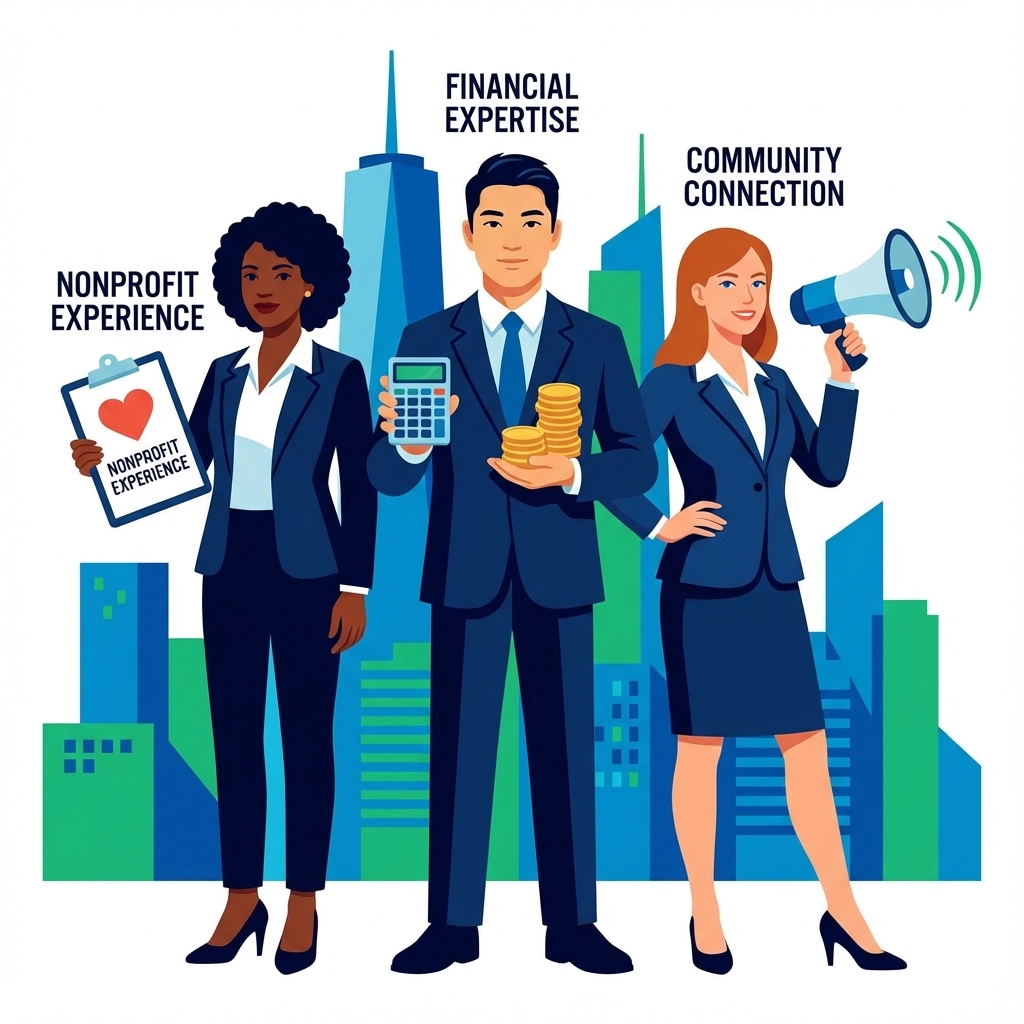
Look for board members who bring different skills: someone with nonprofit experience, a person with financial know-how, maybe someone connected to the community you’re serving. You don’t need lawyers or millionaires (though they don’t hurt), but you do need people who’ll show up and do the work.
Key Requirements:
- Minimum 3 directors (no maximum)
- All must be 18+ years old
- No residency requirements
- Terms are 1 year unless your bylaws say otherwise (max 5 years)
Pro Tip: Avoid having related family members on your board. The IRS gets suspicious about nonprofits that look like family businesses.
How to Build the Best Board for Your Social Justice Nonprofit.
- Start by listing 3 to 7 people who are passionate about your mission. In NY, you need at least three unrelated individuals.
- Look for folks with different strengths—one with legal or financial experience, one who’s a connector in the community, and at least one who knows your program focus (like education, civil rights, etc.).
- Prioritize diversity in background and lived experience—people closest to the issues often have the most insight.
- Early on, friends, mentors, or respected colleagues are common picks, but try to go beyond your closest circle for a stronger, more objective board.
- Set expectations: Board members commit to regular meetings (minimum one per year by law, but quarterly is better), basic fundraising support, and active participation in guiding your mission.
- Put it in writing: Clear board roles and a simple board agreement will save headaches down the road.
- Pro tip: If possible, meet (even virtually) before making it official. Chemistry matters! Your board is your legal backbone and your first team of cheerleaders.
Best Board Tips — Three standout qualities that make a board successful:
- Commitment: Active participation and real belief in your mission.
- Diversity: More than race or gender—it’s about bringing together people with different lived experiences, ages, backgrounds, economic situations, and skill sets. Ideally, your board should include those directly impacted by your mission (for example: if you’re focused on housing, local renters or tenant leaders). This not only builds credibility but makes your work more relevant to funders and the communities you serve.
- Expertise: At least one member with experience in law, finance, fundraising, or your specific program area.
Step 3: Write Your Bylaws
Think of bylaws as your organization’s rule book. They cover how you’ll make decisions, hold meetings, elect officers, and handle day-to-day operations. For social justice groups, this is especially important because you’ll likely be making time-sensitive decisions about campaigns or community responses.
Your bylaws should cover:
- How often you’ll meet
- What constitutes a quorum
- How you’ll vote on decisions
- Officer roles and responsibilities
- Conflict of interest policies
Pro Tip: Look at bylaws from similar organizations for inspiration, but don’t just copy and paste. Your bylaws need to fit your specific mission and operating style.
Step 4: File Your Certificate of Incorporation
This is where things get official. In New York, you file a Certificate of Incorporation (not Articles of Incorporation like some other states) with the Secretary of State.
Your certificate needs to include:
- Your organization’s name (make sure it’s available first)
- Your address
- Your purpose statement
- Board member information
Important: Make sure your purpose statement clearly indicates you’re operating for social welfare, charitable, or educational purposes. This language matters for your later tax-exempt application.
The filing fee is typically around $75, and processing usually takes a few weeks.
Step 5: Set Up Your Officer Structure
New York requires specific officers:
- President
- Secretary
- Treasurer
- One or more vice-presidents (optional but recommended)
The same person can hold multiple offices except president and secretary: those have to be separate people.
For social justice nonprofits, consider creating additional roles like Community Organizer or Policy Director to reflect your specific work.

Step 6: Get Your Federal Tax ID Number (EIN)
Every nonprofit needs an Employer Identification Number, even if you never plan to hire employees. You’ll need this to open a bank account and apply for tax-exempt status.
The good news? It’s free and you can apply online at the IRS website. It literally takes about 10 minutes, and you’ll get your EIN immediately.
Pro Tip: Don’t use third-party services that charge fees for this. The IRS provides it for free.
Step 7: Choose Your Tax-Exempt Status and Apply
This is the big one. Most social justice nonprofits apply for either 501(c)(3) or 501(c)(4) status:
501(c)(3) Organizations:
- Can receive tax-deductible donations
- Limited political lobbying (no candidate endorsements)
- File Form 1023 or 1023-EZ
- Best for: Direct services, education, some advocacy
501(c)(4) Organizations:
- Donations aren’t tax-deductible
- Unlimited lobbying and some political activity
- File Form 1024
- Best for: Policy advocacy, political organizing
Pro Tip: If your work involves significant lobbying or political activity, 501(c)(4) might be better even though donations aren’t tax-deductible. You can always set up a related 501(c)(3) later for your educational work.
The application process is detailed and can take 6-18 months. Form 1023 applications often run 50-100 pages with all the required schedules and attachments.

Step 8: Register with New York’s Attorney General
All charitable organizations operating in New York must register with the state Attorney General’s Charities Bureau. This is separate from your federal tax-exempt status.
You’ll need to:
- File Form CHAR410 online
- Pay a $25 registration fee
- Provide your incorporation documents
- Have your president and treasurer sign the application
Processing typically takes 2-3 months. Once registered, you’ll need to file annual financial reports with the state.
Step 9: Check for Additional Licensing
Depending on your specific activities, you might need additional permits or licenses. For example, if you’re providing direct services like counseling or operating a food program, there may be additional state or local requirements.
Contact New York Business Express to check what applies to your organization based on your location and planned activities.
Step 10: Set Up Your Ongoing Compliance
Congratulations! You’re officially a nonprofit. But the work isn’t done: you need to maintain your status by staying compliant with ongoing requirements:
Federal Requirements:
- File annual Form 990 (unless your revenue is under $50,000)
- Maintain detailed financial records
- Keep meeting minutes and governance documents
State Requirements:
- File annual corporate reports
- Submit financial reports to the Charities Bureau
- Renew any required licenses

Special Considerations for Social Justice Nonprofits
Fundraising Registration: If you plan to solicit donations in other states, you’ll likely need to register there too. Each state has different requirements.
Fiscal Sponsorship Option: If this process feels overwhelming, consider finding a fiscal sponsor: an existing nonprofit that can handle the legal and financial aspects while you focus on your mission. This lets you get started faster and test your concept.
Political Activity Limits: Be very clear about what political activities your tax-exempt status allows. The rules are different for 501(c)(3)s and 501(c)(4)s, and violations can cost you your exempt status.
How Much Does It Cost to Start a Nonprofit in NY (and How Long Does It Take)?
- In New York, the state filing fee for a Certificate of Incorporation is $75. You might also pay $50 for a certified copy and a small fee for reserving a name (optional).
- Federal fees for your IRS tax-exempt application vary—Form 1023-EZ (the streamlined form) is $275, while the full Form 1023 is $600.
- After incorporation, NY requires a charitable registration fee to operate legally (usually $25 for new orgs if your revenue is under $25,000; more if you raise more money later).
- Your total up-front filing costs are usually $350–$700 (state and federal combined), as of late 2025.
Wait Time for Federal Tax-Exempt Status:
- IRS approval for 501(c)(3) status normally takes 2 to 6 months. Streamlined forms with all paperwork in order are faster; missing documents or full applications can take up to 9 months if the IRS is backed up.
What Grant Writers and Funders Want
- A clear mission and proof that your work meets real needs.
- Evidence of strong leadership—meaning an engaged, well-rounded board.
- Good financial practices and clear reporting.
- Results (“outcomes”), not just good intentions—show how you measure impact!
Checklist for Getting Grants for Your Nonprofit
— Get your basics in order:
• Clear legal structure (incorporated or with a fiscal sponsor)
• EIN (Employer ID Number) from IRS
• Mission statement and one-page summary of your work
• Board of directors list (with bios)
• Bylaws/governing documents
— Be grant-ready:
• Track record (proof of what you’ve done—even small wins)
• Latest budget and bank account info
• Clear project proposal showing goals, who you serve, and how you’ll track impact
• Letters of support from partners or community
— For each grant:
• Check eligibility (some are only for 501(c)(3)s; others okay with fiscal sponsor)
• Tailor your application—show how your mission matches the grant’s priorities
• List specific outcomes you’ll achieve with their funding (numbers, stories, photos)
• Make sure your fiscal sponsor and banker are ready to receive funds if approved
— After getting the grant:
• Set up a system to track spending to the penny
• Submit reports & updates to the grantmaker on time
This checklist ensures your org looks professional, responsive, and trustworthy to funders.
Can You Get Grants With a Fiscal Sponsor?
If you’re not yet approved as a 501(c)(3), you can use a fiscal sponsor (an established nonprofit that ‘hosts’ your project). Many grantmakers allow this, especially for new groups. Your sponsor receives the funds and disburses to you—but make sure you have a solid agreement in place first. Some large foundations may require your org to eventually get its own status, but plenty of grassroots grants are open to sponsored projects.
Black and Brown-Led Nonprofits Making an Impact in Rochester, NY.
- Teen Empowerment Rochester: A youth-driven nonprofit building leadership and tackling violence prevention in city neighborhoods. Rooted in Rochester, they run youth-led dialogues, peace circles, and neighborhood events in partnership with schools, block clubs, and the City—putting real youth voice at the center.
- RiseUp Rochester: A community-driven group supporting violence prevention and family healing after loss. With deep neighborhood ties, they host peer-support groups for survivors, organize street outreach and community vigils, and connect families to resources for trauma recovery and safety planning.
- Action for a Better Community (ABC): Doing major work in education, economic development, and health for Black and Brown families. As a long-standing local hub, ABC powers Head Start and workforce training, helps with job placement and energy assistance, and partners with clinics and employers to drive long-term change.
- The Avenue Blackbox Theatre: Arts/nonprofit supporting youth and BIPOC creatives—praised for giving a platform to voices that often go unheard. They present original works, residencies, and youth workshops, and regularly collaborate with schools and neighborhood groups to turn community stories into performance.
Why Fiscal Sponsorship Matters for Grassroots Groups.
- A fiscal sponsor lets new grassroots orgs fundraise and accept grants right away using the sponsor’s tax-exempt status. This means you avoid long IRS wait times and complicated filing at the start.
- Good sponsors offer banking, legal, and reporting help, so you can focus on your mission, not paperwork.
Tax Implications for Groups Using a Fiscal Sponsor.
- The sponsor is the legal recipient of the money, so technically, donations and grants are made to them (and are tax-deductible for donors). Your group accesses funds by submitting requests/expenses to the sponsor.
- If all funds go through the sponsor and are spent on charitable purposes, your grassroots group typically doesn’t file separate tax returns or pay taxes—the sponsor handles that.
- But: If funding is misused or spent outside the nonprofit’s mission (say, on personal expenses), the IRS could treat those funds as taxable income to individuals. The sponsor could also face penalties/loss of status.
Hypothetical Example 1: The “Community Rising Project” uses a fiscal sponsor to raise $30,000. They submit receipts for community event costs; the sponsor pays vendors directly or reimburses the group. No tax liability as long as spending aligns with their mission and sponsor policies.
Hypothetical Example 2: Suppose the Project leader paid themselves $8,000 from the funds but can’t show a contract for wages and didn’t track hours worked. The IRS might see this as personal income (subject to individual taxes and penalties).
- Sponsors often require approval before big purchases or grants to ensure everything is above board.
- Always keep records—receipts, invoices, contracts—because clear documentation protects the grassroots org and sponsor from tax trouble.
- Tip: Have a written agreement that covers accounting, reporting, and how much the sponsor charges in admin fees (often 5–10%).
How Long Does It Take to Get Started?
In New York, most groups can expect it to take about 3 to 6 months from your first paperwork to being fully set up and able to take donations. This covers state filings, IRS approval, and getting your first bank account open. Some steps can go faster or slower, depending on how quickly you get your paperwork together and how busy the IRS and state offices are.
How Long Does Tax-Exempt Status Take?
After you form your nonprofit and send your 501(c)(3) application to the IRS, the wait for tax-exempt approval is usually 2 to 6 months. If your paperwork is complete and you use the streamlined (Form 1023-EZ), it can be closer to 2 months. Full applications or missing documents make it longer, sometimes up to 9 months if the IRS backlog is bad. You can do some fundraising while waiting, but official donations aren’t tax-deductible until the IRS gives the green light—retroactive to your filing date if you’re approved.
Need Help Starting or Growing Your Nonprofit?
- If you want expert help to set up your not-for-profit, check out Gwen Curry—a well respected and extremely experienced Sistah in the nonprofit world. She organizes nonprofits, knows how to get grants, and can guide you through every step. Reach Gwen at 704-491-5745.
- Another trusted resource is Attorney Amy D’Amico (585-465-8080), who has helped many people obtain grants and establish new organizations.
They’re friendly, practical, and used to working with grassroots leaders—connect with them for hands-on support tailored to your mission.
Final Thoughts
Starting a social justice nonprofit requires patience and attention to detail, but don’t let the paperwork discourage you from pursuing your mission. The legal structure exists to protect your organization and the communities you serve.
Consider working with an attorney experienced in nonprofit law, especially for the tax-exempt application. The upfront cost can save you major headaches down the road.
Remember, becoming a legal nonprofit is just the beginning. The real work happens when you start making the change you set out to create in your community.
Ready to get started? Begin with that formation meeting and mission statement. Everything else flows from there, one step at a time.
 Diallo Payne Law Library
Leave a comment