![[HERO] Frederick Douglass: The Lion of Anacostia and the Quest for Freedom](https://cdn.marblism.com/4n0_J3HBm04.webp)
Frederick Douglass wasn’t just a former slave who became free. He was a man who beat the system, fought back literally and figuratively, and became one of the most important voices in American history. His story is raw, complicated, and honestly more incredible than most people realize.
A Mother He Barely Knew
Frederick Augustus Washington Bailey was born into slavery around 1818 in Maryland. His mother, Harriet Bailey, was a slave who worked on a nearby plantation. Here’s the heartbreaking part: Frederick only saw his mother a handful of times in his entire childhood. She had to walk twelve miles at night after working all day just to see her son, and she’d have to be back before sunrise or face brutal punishment.
She died when Frederick was around seven years old. He didn’t get to attend her funeral. He didn’t even know she had passed until well after the fact. This separation of mothers from their children was standard practice in slavery: a deliberate tactic to break family bonds and make people easier to control.
Baltimore: Learning to Read Changes Everything
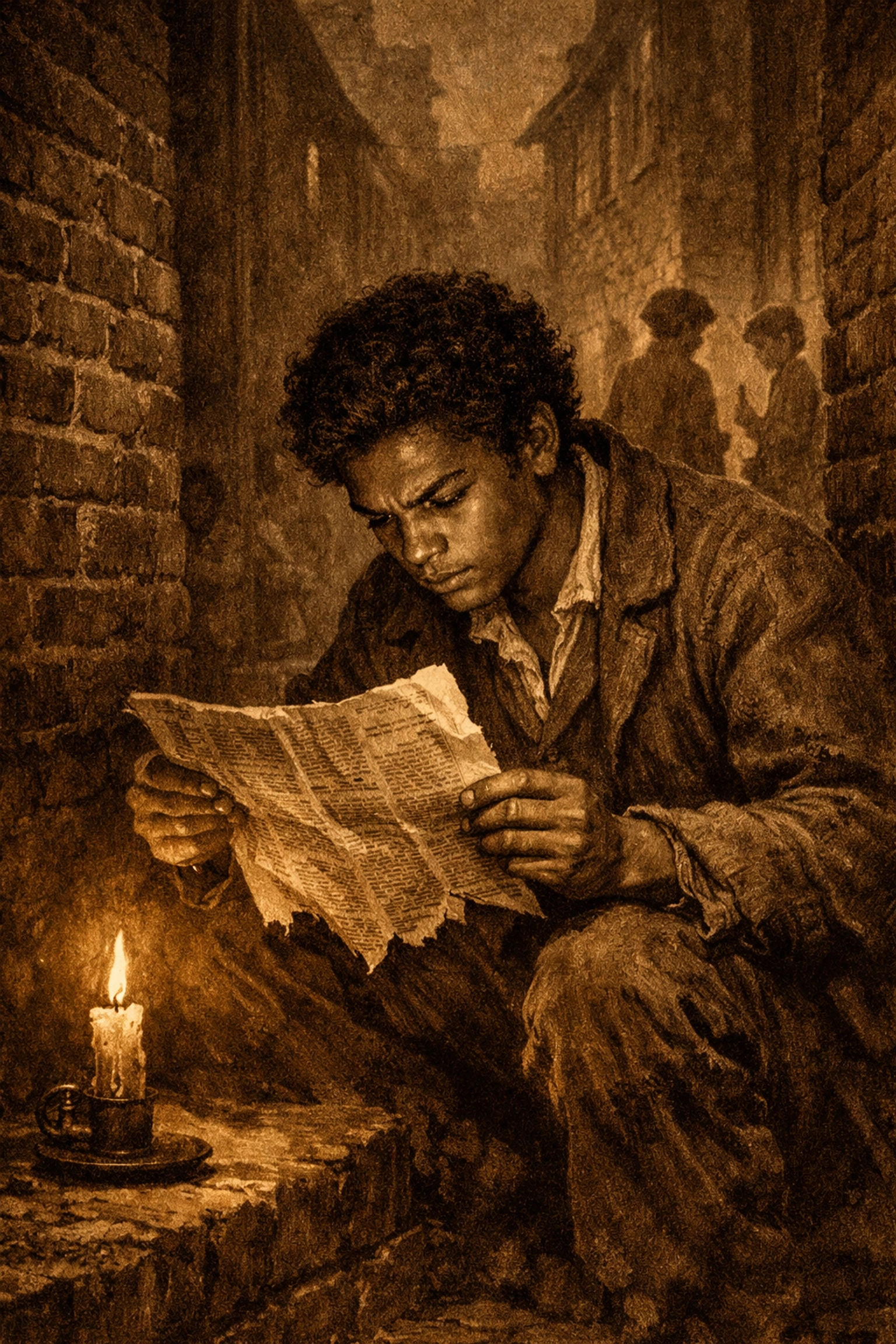
When Frederick was about eight years old, he was leased out to the Auld family in Baltimore. This move changed his life. Sophia Auld, his owner’s wife, started teaching him to read until her husband shut it down fast. “Learning will spoil the best slave,” Hugh Auld told her.
But it was too late. Frederick had caught the reading bug. He traded bread with poor white kids on the streets of Baltimore in exchange for reading lessons. He studied newspapers, scraps of text, anything he could get his hands on. He copied letters from ship timber at the shipyard where he worked. That hunger for knowledge became his weapon.
The Fight That Changed Him
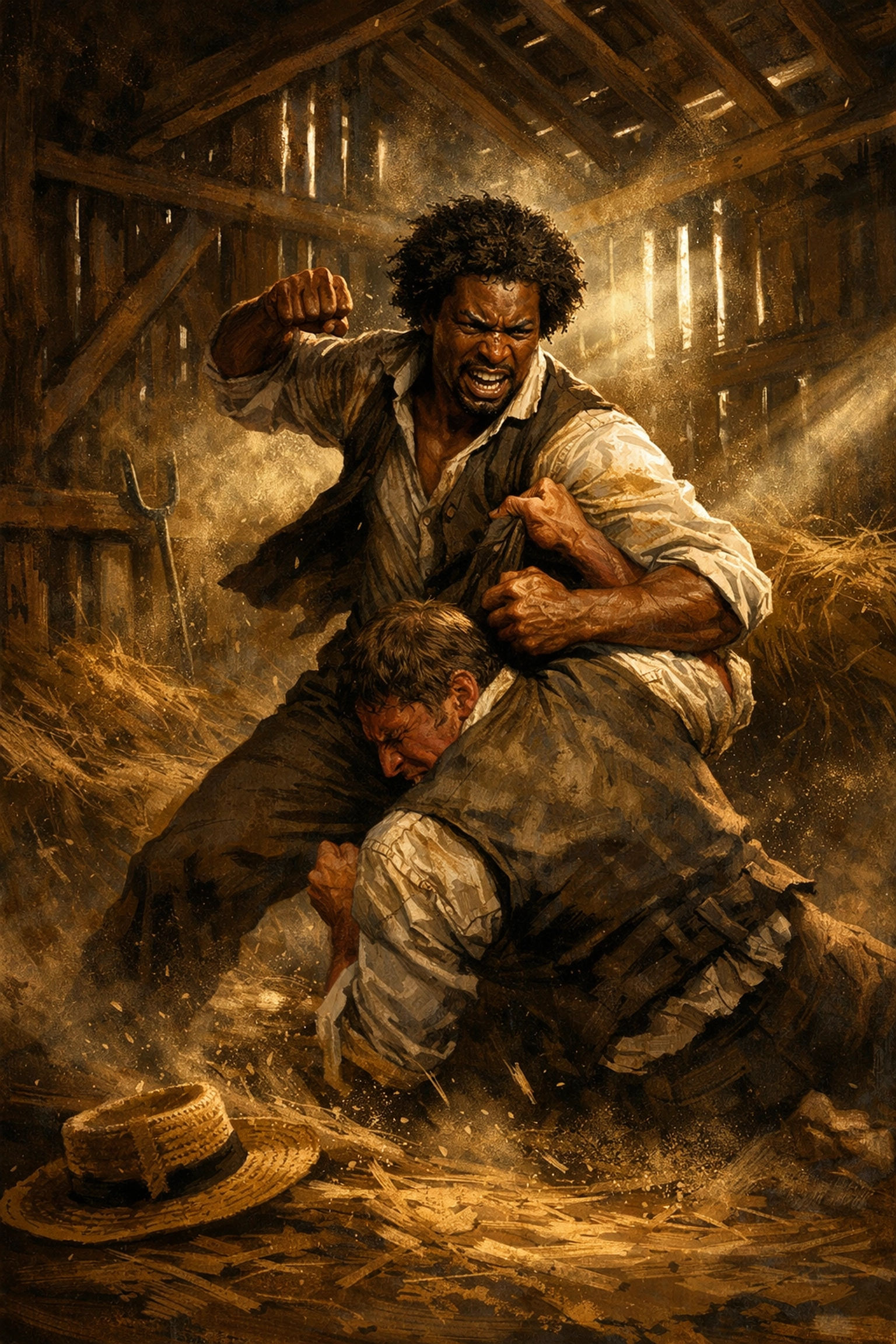
In 1834, Frederick was sent to work for Edward Covey, a farmer known as a “slave breaker.” Covey’s job was to beat the spirit out of slaves who were considered troublesome. He whipped Frederick regularly, trying to break him down.
But one day in August 1834, something snapped. After months of abuse, Frederick fought back. The two men fought for nearly two hours: a brutal, physical battle where Frederick refused to back down. Covey never touched him again.
“It rekindled the few expiring embers of freedom,” Douglass later wrote. That fight wasn’t just physical resistance. It was Frederick reclaiming his humanity. It proved to him that he could stand up, that he wasn’t property, that he was a man.
The Underground Railroad and Freedom
By 1838, Frederick had had enough. He was back in Baltimore, and he started planning his escape. On September 3, 1838, dressed as a sailor and carrying borrowed identification papers, Frederick boarded a train heading north. The expanding railroad system made his escape possible: trains moved faster than pursuers could follow.
Within twenty-four hours, he was in New York. He was free. He changed his last name from Bailey to Douglass to avoid slave catchers. The man who had been beaten, separated from his mother, and treated like property was now Frederick Douglass: and he was about to become a force of nature.
The North Star: His Own Voice
In 1847, Douglass started his own abolitionist newspaper, The North Star, in Rochester, New York. The motto said it all: “Right is of no Sex: Truth is of no Color: God is the Father of us all, and we are all brethren.”
And it wasn’t just words. The North Star was a real operation with real addresses. Early on, the paper was produced out of Rochester’s Talman Building (25 East Main Street)—one of the most famous physical “Douglass landmarks” in the city. Over the years, as the paper evolved and the operation shifted, Rochester stayed the hub: the editorial work, printing, and distribution were rooted in the city even as titles and business arrangements changed.
This wasn’t just a newspaper. It was Douglass claiming his narrative and giving a platform to the abolitionist cause written by a Black man who had lived through slavery—and doing it in a Northern city close enough to Canada that the stakes stayed very real.
Financially, it was a grind. One reason it survived in the early years was help from allies who knew how fragile Black-owned publishing could be. Martin R. Delany—coming off the collapse of his own Pittsburgh newspaper, The Mystery—threw support behind The North Star and worked with Douglass in the project’s early run. The paper later changed names and formats (including Frederick Douglass’ Paper), but that Rochester start—and that hustle to keep it alive—was the foundation.
Revolutionary Friendships: John Brown and Martin Delany
Douglass had complicated relationships with some of the most radical freedom fighters of his time.
John Brown was the white abolitionist who believed armed rebellion was the only way to end slavery. Brown and Douglass met multiple times, and Brown tried hard to recruit Douglass for his raid on Harpers Ferry in 1859. Douglass refused: he thought the plan was suicide. He was right. Brown was captured and hanged, and Douglass had to flee to Canada temporarily because authorities thought he was involved.
Martin Delany was a Black nationalist who believed African Americans should emigrate to Africa or the Caribbean because America would never truly accept them. Douglass disagreed. He believed in fighting for full citizenship and equality in America. Despite their philosophical differences, they respected each other’s dedication to Black freedom—and they also overlapped in practical ways, especially in the world of Black journalism. After Delany’s Pittsburgh newspaper, The Mystery, collapsed, he backed Douglass’s Rochester project, The North Star, and worked with him in its early days, helping keep the paper (and its message) moving.
Anna Murray Douglass: The Woman Who Made It Possible
Let’s be clear: Frederick Douglass doesn’t escape slavery without Anna Murray. She was a free Black woman working as a domestic servant in Baltimore when she met Frederick. She didn’t just support his escape: she funded it. She sold her feather bed and gave him the money to buy his train ticket and sailor’s disguise.
They married in New York just days after his escape. Anna couldn’t read or write, but she was sharp, resourceful, and kept the Douglass household running for forty-four years while Frederick traveled the country giving speeches. She raised their five children largely alone, managed their finances, and dealt with constant threats from slave catchers and racist neighbors.
While Frederick became famous, Anna stayed in the background by choice. She didn’t want the spotlight. But make no mistake: she was the backbone of everything Frederick accomplished. When she died in 1882, Frederick was devastated. He remarried two years later to Helen Pitts, a white woman, which caused enormous controversy.
Talking Truth to Power: Lincoln Meetings
Douglass met with President Abraham Lincoln three times during the Civil War. These weren’t friendly chats. Douglass pushed Lincoln hard on the treatment of Black soldiers, equal pay, and what freedom would actually look like after the war.
During their first meeting in 1863, Douglass confronted Lincoln about the unequal pay for Black soldiers: they were getting about half what white soldiers earned. Lincoln listened. The meetings didn’t solve everything immediately, but Lincoln respected Douglass enough to actually hear him out. Douglass later said Lincoln was “the first great man that I talked with in the United States freely, who in no single instance reminded me of the difference between himself and myself, of the difference of color.”
Fighting for Rosetta
Douglass didn’t just fight for freedom in abstract terms. When his daughter Rosetta was kicked out of a private school in Rochester, New York, in 1848 simply because she was Black, Frederick went to war. He wrote scathing articles, gave speeches, and pushed back hard against the school’s racism.
That same Rochester period also produced some of his most famous public moments. On July 5, 1852, at Corinthian Hall in Rochester, Douglass delivered the speech that still hits like a punch: “What to the Slave Is the Fourth of July?” It’s one of the clearest, most brutal explanations of American hypocrisy ever put into words—Douglass basically telling a crowd celebrating liberty that the holiday was a mockery while millions stayed in chains.
And it’s also where you see how wide his “equal rights” lens really was. Douglass wasn’t only an abolitionist; he was a women’s rights ally, too. He supported women’s suffrage early, attended the 1848 Seneca Falls Convention, and spoke up when it mattered—backing the push to include the right to vote in the movement’s demands. Through the 1850s women’s rights conventions (including gatherings in upstate New York that built on Seneca Falls), Douglass kept showing up as a public supporter, tying women’s equality to the same basic principle he argued everywhere: rights are rights, and nobody gets to ration them out.
His Rochester years also plugged him into a strong Black activist network that didn’t always agree with him at first. One key figure was Austin Steward, a formerly enslaved man turned Rochester businessman and abolitionist. Steward and other Black leaders in the area pushed community self-reliance, education, and institution-building, and Douglass—who initially leaned hard into integration strategies—had to learn, adjust, and collaborate. Their relationship wasn’t about hero worship; it was more like a reality check from people already doing the work on the ground in Rochester.
Rosetta eventually became a teacher herself and a women’s rights activist. She fought for both racial and gender equality, carrying on her father’s legacy.
Haiti: Diplomat Years
In 1889, President Benjamin Harrison appointed Douglass as U.S. Minister to Haiti. At age 71, Douglass became America’s ambassador to the first Black republic in the Western Hemisphere. He served for two years, navigating complicated negotiations between Haiti and U.S. business interests.
It was a fitting role for a man who had spent his life fighting for Black freedom and dignity. Though his tenure had challenges: he resigned in 1891 over disagreements with U.S. policy: it showed how far he’d come from that scared child separated from his mother.
Ida B. Wells: Passing the Torch
Near the end of his life, Douglass formed a friendship with Ida B. Wells, the fierce journalist and anti-lynching crusader. When Wells was exiled from Memphis for her investigations into lynching, Douglass supported her work. He wrote the introduction to her pamphlet “Southern Horrors” and encouraged her activism.
Wells later recalled that Douglass told her, “You have done something that I have not been able to do.” He saw in Wells the next generation of fighters who would continue the battle he’d been waging for decades.
Unknown Facts About the Lion
- Most photographed man of the 19th century: Douglass sat for more portraits than even Lincoln. He believed controlling his image was a form of resistance.
- He never learned his actual birthday: He chose February 14 as his birthday, though he didn’t know the real date.
- He played the violin: Music was one of his lifelong passions.
- His sons fought in the Civil War: Charles and Lewis both served in the famous 54th Massachusetts Infantry Regiment.
- He lived in Ireland and England: To escape slave catchers after publishing his autobiography in 1845, he spent nearly two years abroad giving speeches.
- His Rochester home burned in 1872: While he was away in Washington, D.C., Douglass’s longtime Rochester house was destroyed by fire in 1872, and he suspected it was set deliberately. Beyond the personal shock, the fire also meant the loss of an enormous amount of papers and history—letters, records, and pieces of his life’s work.
Frederick Douglass died on February 20, 1895, at his home in Anacostia. He’d spent the day at a women’s rights convention. Even at 77, he was still fighting.
From a child who barely knew his mother to the Lion of Anacostia: a self-educated intellectual, newspaper publisher, presidential advisor, and diplomat: Frederick Douglass proved that freedom isn’t given. It’s taken, defended, and fought for every single day.
His legacy isn’t just history. It’s a blueprint for resistance.
 Diallo Payne Law Library
Leave a comment